OpenAI Puts AI to Work on Chip Design, Improving AMD's Flagship GPU Design by Up to 14%
The company says applying AI to its own Jalapeño chip and to AMD designs reduced circuit area and computation time. It also released evaluation results for GPT‑6.2 Astra and details of a partnership with Synopsys.
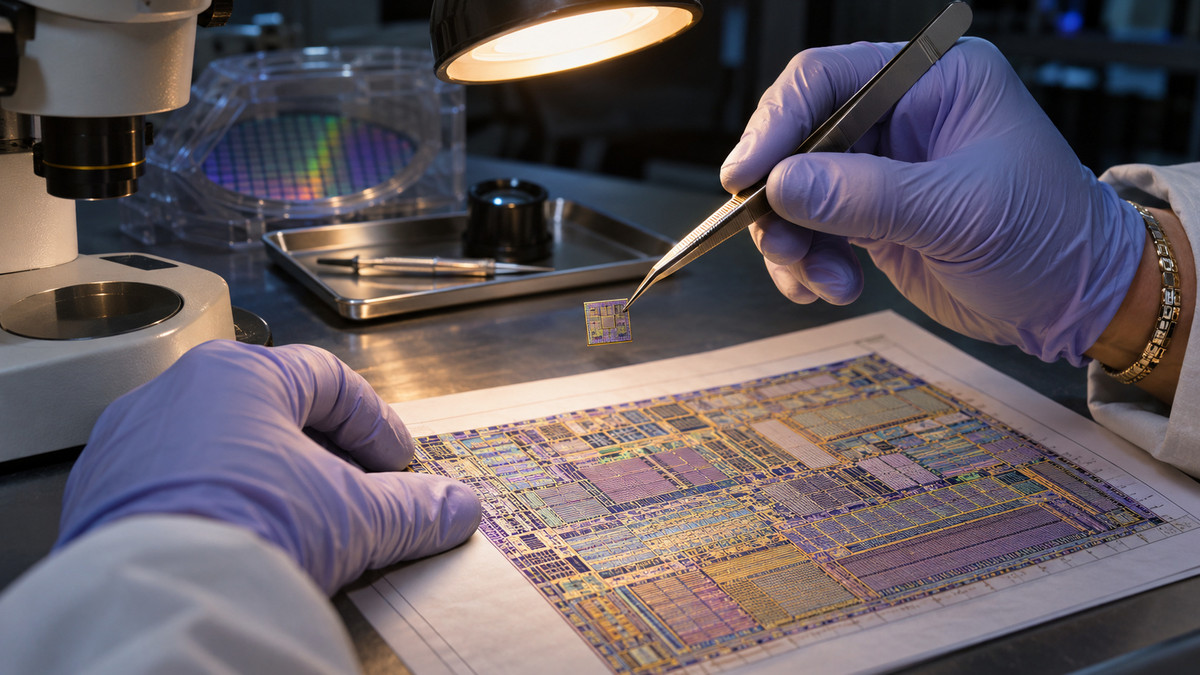
OpenAI on November 18 announced results from applying AI to the design of its own chip, Jalapeño, as well as to AMD’s GPUs and CPUs. The work involves shrinking circuits while pushing power efficiency and performance higher. Alongside the results, the company published a head-to-head comparison of its models on two open-source chip designs and disclosed a partnership with chip design tool maker Synopsys.
How much did circuit area actually shrink?
Jalapeño is OpenAI’s chip for handling inference, the process by which an AI model produces its answers. OpenAI has been using GPT‑o3 mini on the chip’s design since early 2025. By incorporating the model’s suggestions, the company estimates it cut the circuit area of the vector arithmetic block by roughly 13% and the matrix arithmetic block by roughly 10%.
In some cases, circuits got smaller and faster at the same time. One multiplier design in the matrix arithmetic block shrank by about 15% in area, while the time it took to compute dropped from two clock cycles to one. In another case, an adder design kept the same computation time while shedding about 15% of its area.
OpenAI says it saw improvements in AMD’s designs as well. Measured against an already heavily optimized flagship GPU design, a combined metric covering power, performance, and area improved by as much as 14%. The company also said it achieved what would normally take about a year of progress in under five months. AMD has already incorporated some of the changes into a design sent for manufacturing. OpenAI added that the same metric improved by a single-digit percentage in key portions of AMD’s next-generation flagship CPU.
How good is GPT‑6.2 Astra at design?
For the model comparison, OpenAI used PicoRV32 and Ibex, two publicly available chip designs that anyone can work with. In an evaluation using comparable token budgets per run, GPT‑6.2 Astra achieved the highest average score on both designs. On the task of improving an existing PicoRV32 design, it scored roughly twice as high as GPT‑6 Astra. GPT‑6.1 Sol also outscored GPT‑5.6 Sol on both designs.
OpenAI also ran a task in which models built a chip design from scratch, given written requirements plus a public code scaffold describing how the core connects to the rest of the system. With a token budget of about 112,000 per run, all five models in the comparison scored higher on this task than they did on modifying an existing design. GPT‑6.2 Astra averaged above 0.7 on PicoRV32 and about 0.75 on Ibex. In total, 9,881 runs were scored.
OpenAI noted that differences in the task conditions may have influenced the scores. In the from-scratch task, models were allowed to omit performance counters and extra instructions that existed in the original designs. Any run that failed verification or exceeded 16 times the area of the original design was scored as 0. Tighter area limits, and checks that synthesize all the way through circuit placement before verifying timing, were not included in the evaluation.
When will designers be able to use this?
OpenAI also described a collaboration in which it is training a new model, GPT‑Synopsys, to operate Synopsys’s chip design tools. It did not disclose pricing, who will have access, or when it will be available.
The core of this announcement is that some AI-suggested circuit improvements have made it into a design already sent for manufacturing. Going forward, the things to watch are the terms of access for GPT‑Synopsys and whether the gains measured in evaluations hold up in real silicon.