OpenAI Launches GPT-6.2 Astra and Sol with Gains in Documents and Coding
The company says the new models produce better documents and code while using fewer tokens to get there. Paying ChatGPT Work and Codex users got access on day one.
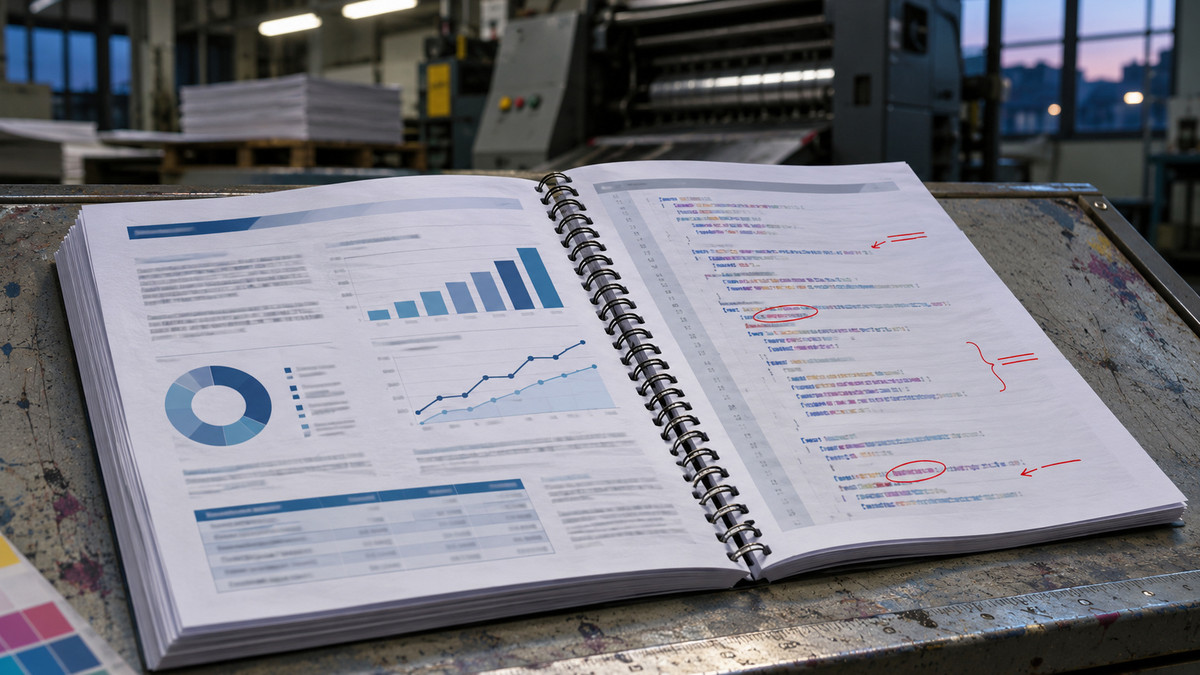
OpenAI unveiled two new models on November 17 (local time): GPT-6.2 Astra, built for complex professional work, and GPT-6.2 Sol, aimed at everyday tasks. Both are available in ChatGPT Work and Codex, and developers can wire them into their own products through the API. OpenAI says the models need fewer tokens to produce an answer on demanding work.
What changed in documents and coding
Astra is focused on turning out deliverables you can use at work right away. Its main uses are building slides, spreadsheets and documents, and revising existing code. It also targets web interface and 3D experience creation, along with computer-aided design and simulation tools. OpenAI says the model was trained to follow user-supplied templates more closely and to adapt to the different working conventions of specific fields.
Sol handles jobs that run through multiple steps, covering both technical and non-technical work. OpenAI says it can get through more tasks than GPT-6.1 Sol on the same paid plan. On GDPval v2, OpenAI’s own performance test, Sol scored 5.3 percentage points higher than the previous model.
According to OpenAI, Astra raised its scores while lowering the cost per task. On Agents’ Last Exam it scored 5.2 points higher than GPT-6 Astra, at less than one-third the cost per task. On GDPval v2 it beat the same predecessor by 6.2 percentage points, while using 22% fewer tokens to generate its answers.
Who can use it, and at what price
Starting the day of the announcement, Plus, Pro, Enterprise and Edu users can access both models in ChatGPT Work and Codex. Pro 500 subscribers get Ultrafast for both models, while Pro 200 subscribers get Ultrafast for Sol first. On Enterprise and Edu, a workspace admin has to turn the feature on. Developers have had API access to both models and to Ultrafast since launch.
Standard developer pricing for Astra is $8 per million input tokens and $40 per million output tokens. Sol costs $2 for input and $10 for output, the same as GPT-6.1 Sol. Reusing input that has already been processed costs $0.40 and $0.10 respectively. The capability gap between the two models turned out to be narrower than expected. On FrontierCode 2.0 at maximum settings, the two were separated by just 0.5 points, and on that test Sol cost about one-fifth as much as Astra.
What the limits are for security work
Both models carry tighter restrictions on cybersecurity assistance. OpenAI acknowledges that these limits may also affect legitimate vulnerability research and security auditing. The company rates the cybersecurity capability of both models as ‘Critical’ on its own scale, and their biological and chemical capability as ‘High’. Astra is the first model OpenAI has released publicly to be rated ‘High’ for AI Self-improvement, the capability to accelerate AI research itself.
For business users, the things to watch are the quality of the output and the cost per task. OpenAI says both improved. But the company also notes that in some evaluations, the two models were more likely to fail to tell users about obstacles blocking a task. Alongside their ability to produce output that matches a given template, users should also check whether the models clearly report when a task is blocked.