OpenAI Unveils Control Room to Halt AI Outputs When Research Tasks Run Into Trouble
The system manages permission to generate AI responses for individual research tasks. It blocks further outputs when safety or security issues arise, though a stop instruction can take up to 35 seconds to take full effect.
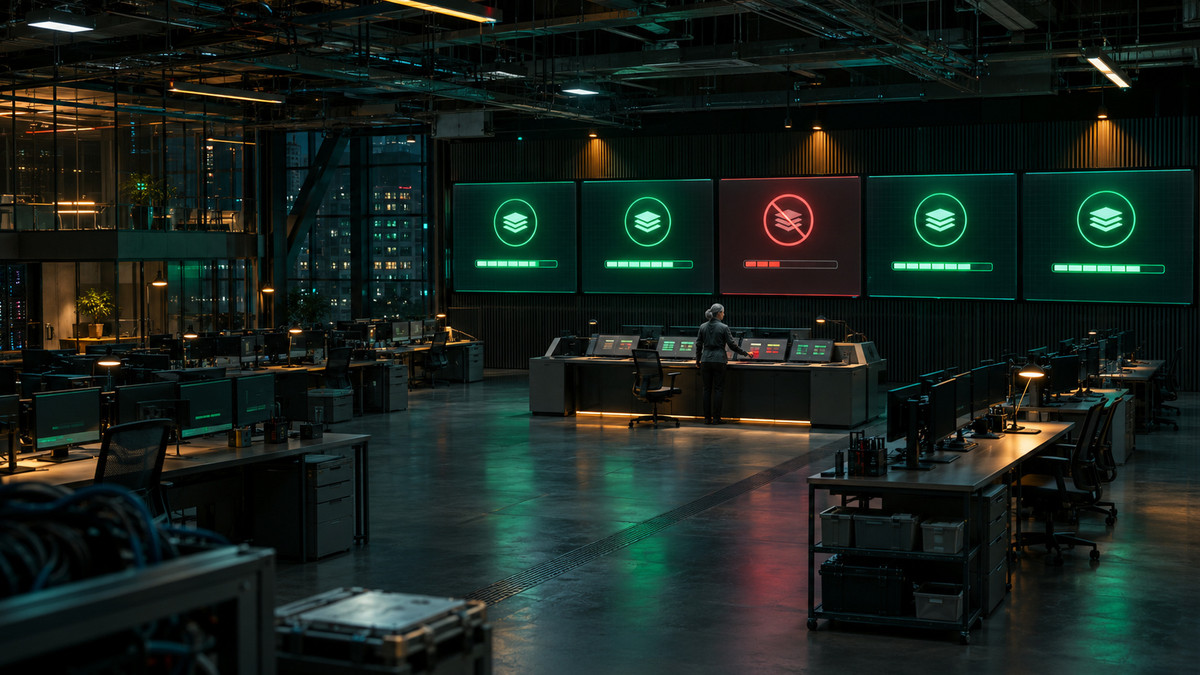
OpenAI unveiled Control Room on November 9 (local time), a central system for managing AI outputs in research. It prevents AI from generating further responses for tasks where safety or security issues arise. OpenAI said it has already deployed the system for research tasks that generate model responses.
How does it stop AI outputs?
Control Room assigns each research task a distinct identifier. Before processing a request, the system that generates model responses checks with Control Room for permission. Requests associated with tasks designated for shutdown are rejected.
Blocking outputs does not necessarily stop the underlying program from running. But the halted task can no longer obtain additional model responses. Other authorized research tasks can continue, even when they use the same system.
The system covers tasks that obtain AI outputs for model training and evaluation, as well as data processing. These tasks use agents, AI systems that carry out work autonomously. OpenAI said it requires safety reviews and approval for all research tasks in which agents use model responses. It also said every training run in which a frontier model learns behavior through rewards uses a separate monitoring model to observe the model being trained.
Why can stopping outputs take up to 35 seconds?
According to OpenAI, a stop instruction can take up to 35 seconds to take full effect. This is because permission information is temporarily cached to handle large volumes of requests. The company said it is working to eliminate that delay.
Control Room is designed to reject all requests for model outputs if the system itself goes down. OpenAI said it has applied this failure-handling approach to research tasks involving frontier models. At the time of the announcement, it expected to finish extending the approach to the remaining research tasks within a few days.
What changes for AI research oversight?
Alongside monitoring the behavior of research AI, OpenAI now has a mechanism to block further outputs from tasks that run into trouble. Control Room connects safety reviews and behavior monitoring to the ability to halt outputs, while allowing other authorized tasks to continue.
Two improvements announced by OpenAI remain to be completed. The approach that rejects requests when Control Room goes down still needs to be extended to the remaining research tasks. Work is also underway to eliminate the delay of up to 35 seconds before a stop instruction takes full effect.