OpenAI Prototypes a GPT-6 Astra-Designed Device in a Month
GPT-6 Astra did the design work, and a contract manufacturer turned out a small batch within a month. The models are now being applied to car design too, but their output still needs engineers to review and revise it.
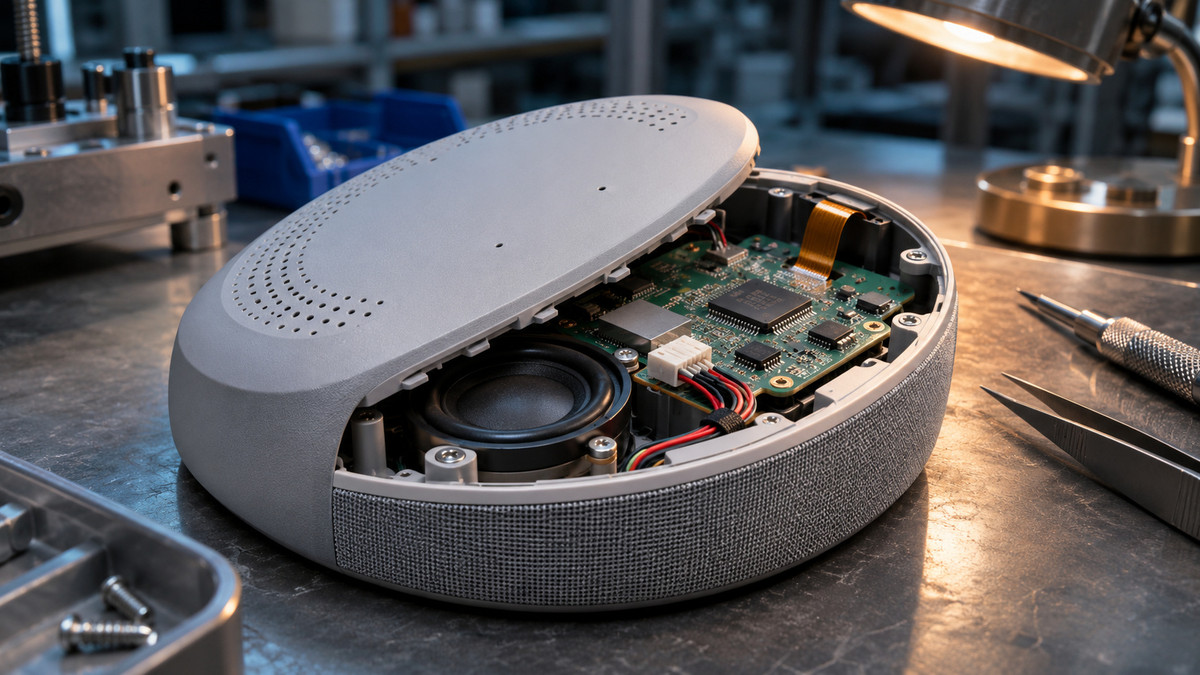
On November 3, OpenAI published a set of case studies showing how ChatGPT and Codex are being used to design and build real products. The work spans mechanical and electrical design, simulation, and full system architecture. The company also shared results from using GPT-6 Astra to design a test device, along with research collaborations in the automotive sector.
How much of the device did AI actually design?
The test case was a device you can talk to Codex through. Under the condition that no human would directly edit the design files, GPT-6 Astra designed both the enclosure and the internal structure. It also selected components and determined their placement and connections on the circuit board. The user interface and controls, the firmware that runs the device, and the software integration were all part of its scope.
According to OpenAI, two team members finished the design within a week as a side project alongside their regular work. A contract manufacturer produced a small batch of prototypes within a month. The build process required several rounds of review and revision. OpenAI said Astra did not consistently account for the manufacturer’s production limits, tolerances, and assembly details.
How widely is it used for in-house design work?
Inside OpenAI, the hardware and infrastructure teams are using ChatGPT and Codex for design work. They use the models to create and revise computer-aided design (CAD) models and manufacturing drawings, to set up simulations, and to review designs. Robotics and computing infrastructure work is included as well. The company says the hardware team’s model usage has grown 23-fold since February, measured in tokens, the chunks of text exchanged with a model.
On benchmarks that measure design ability, a newer internal model outperformed GPT-6 Astra. OpenAI reported an average BenchCAD 2.0 score of 0.875 for the internal model. GPT-6 Astra scored 0.594 at its highest reasoning setting. The benchmark tests the ability to reconstruct three-dimensional parts and assemblies and to infer the connectivity of a circuit board.
How is it being used in car design?
In the automotive space, OpenAI is testing the conversion of existing physical parts into design documentation. Working with Chip Ganassi Racing, the company is turning three-dimensional scan data of parts into editable CAD models and two-dimensional manufacturing drawings. The task is to move scanned geometry into design models that engineers can modify and drawings that can be used for production.
OpenAI also announced a new research collaboration with Mazda on using the models for vehicle design and evaluation. Aerodynamics and crash safety engineers are taking part. On the aerodynamics side, GPT-6 Astra is used to explore front-end body shapes and simulate airflow. Engineers review whether the results are accurate and usable.
Taken together, these cases show the scope of AI use expanding beyond writing text and code into design files and manufacturing drawings. OpenAI has invited engineers, engineering firms, and software companies to join the collaboration. It said it would share progress and results from the Mazda partnership over the coming months.