Anthropic Adds Invisible 'AI Markers' to Text From Four Claude Models
Anthropic is adding invisible markers to four Claude models. For Opus 4.6 and Sonnet 4.6, the marker may not be applied if developers change their settings.
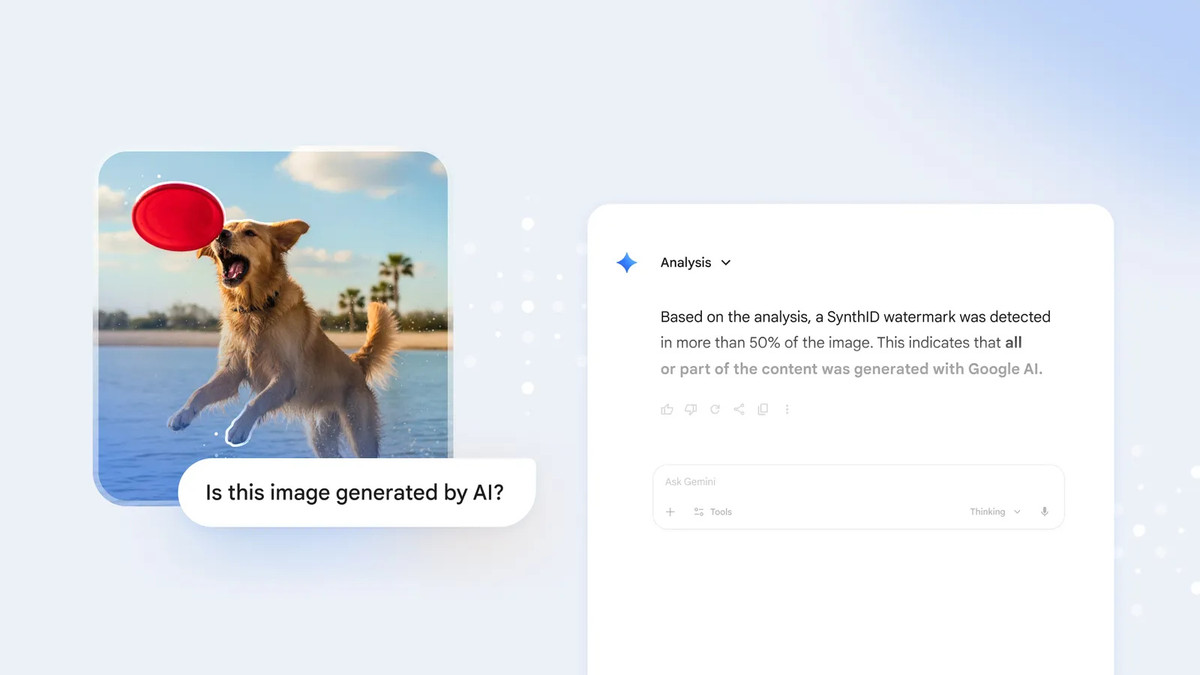
Anthropic is adding a marker to four Claude models that can indicate whether a piece of text passed through Claude. This kind of marker, left inside the text itself where no reader can see it, is called a text watermark. The Decoder, citing an email sent to customers, reported that the models covered are Claude Mythos 5, Opus 4.7, Opus 4.6 and Sonnet 4.6. On Amazon Bedrock, Amazon Web Services’ (AWS) platform, the rollout may take a few more days.
Why Opus 4.6 and Sonnet 4.6 are different
These two older models come with their own conditions. According to the Anthropic notice cited in the report, the marker is only applied when all three settings that influence word choice are left at their default values. In practical terms, that means a developer working through the API, the interface used to build Claude into other products, can change just one of those settings and the marker may no longer be applied. Anthropic also included a compliance warning alongside these conditions, The Decoder reported.
Anthropic had previously said that models released on or after August 2 would ship with the watermarking feature built in, while earlier models would get it gradually. This latest move extends coverage to those existing models.
How an invisible marker is left behind
The technique does not involve slipping special characters into the text. Anthropic says it uses an approach in the family of Google’s SynthID-Text. The method adjusts how the random numbers that guide the model’s choice of each next word are generated, leaving behind a statistical pattern that a detection tool can pick up. The company says there is no meaningful effect on text quality or speed, and no change in pricing.
Anthropic says the marker carries no information that could identify an individual, an organization or a conversation. The company also notes that detecting the marker is not proof that an entire piece of text was written by Claude. In short passages, in text that has been heavily edited or translated, and in code where exact wording matters, the detection signal can weaken or vanish entirely.
Does this apply to users in Korea?
Yes. Anthropic says the watermarking feature for supported models applies worldwide across the Claude apps, the API, Claude Code and supported cloud services. Korea is an officially supported country for Claude, and the web and desktop interfaces support Korean. The tool for checking whether a given text contains a marker, however, is still in a private preview available only to qualified institutions and companies.
Coverage and opt-in choices vary by company. In an October announcement, OpenAI said it would add text watermarks to ChatGPT and Codex output for users covered by European Union (EU) rules, and that API customers worldwide would be able to turn the feature on if they wanted it. Anthropic has emphasized worldwide application for supported models, but attached generation-setting conditions for the two older models.
With this expansion, more Claude output will carry a clue as to whether it was written by AI. For developers building products, the model they choose and the settings they leave in place will determine whether the marker is there at all. Whether detection still holds up after text has been edited or translated is something to watch going forward.