Anthropic Expands Claude Research Partnerships With 20 Science Foundations, Institutes and Research Groups
The company is working with 20 science foundations, research institutes and research groups to provide Claude credits for research. The program has grown from supporting individual scientists to partnering with institutions.
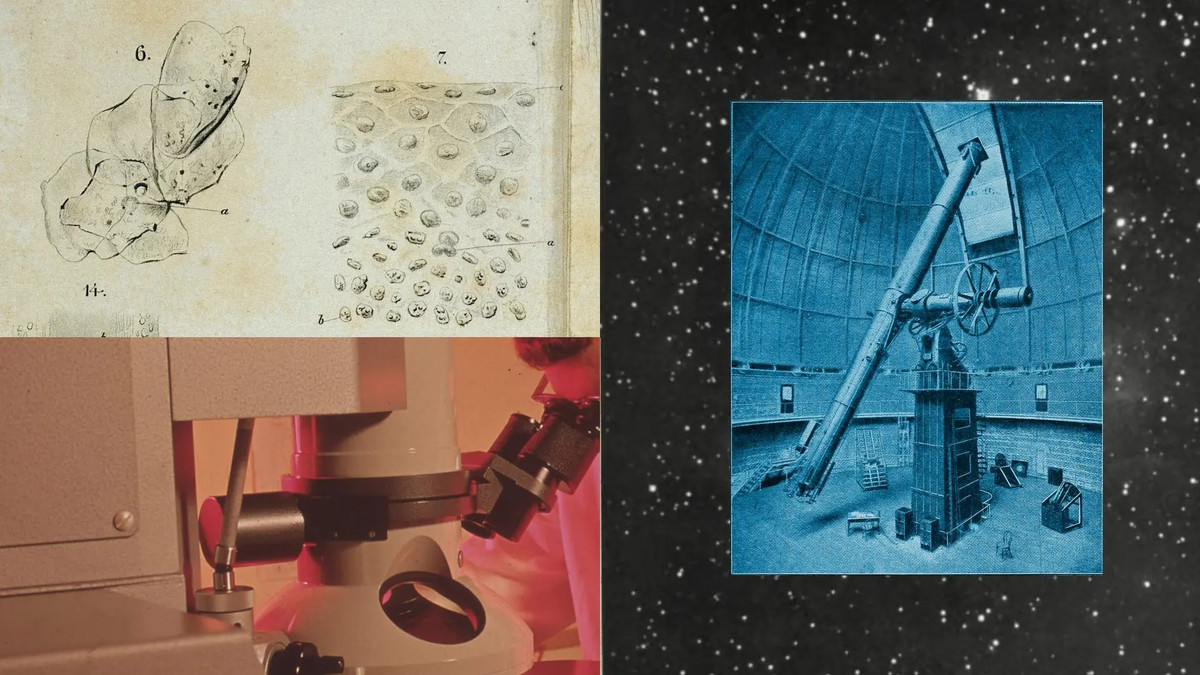
Anthropic announced on October 28 that it is expanding AI for Science, its support program for scientific research. It named the 20 science foundations, research institutes and research groups it will work with. The program provides credits that let researchers use Claude at no cost for high-impact research.
Who gets the credits
Eligibility has widened from individual scientists to foundations and research institutions. Anthropic said that since launching the program in May 2025 it has supported hundreds of projects across biology, medicine, physics, chemistry, climate science and mathematics. In recent months it has also introduced a discounted Team plan for scientists.
Credits reach researchers through several routes. The Sloan Foundation, the Simons Foundation, Schmidt Sciences and the U.S. National Science Foundation distribute the credits they receive to researchers. The Space Telescope Science Institute, the Wellcome Sanger Institute and the Francis Crick Institute use them for research inside their own organizations. Anthropic is also continuing to award credits directly to individual research projects.
What researchers are doing with Claude
Claude is being used at nearly every stage of research. Anthropic said scientists are using it to form hypotheses and design experiments, analyze complex data, and write up and communicate results. New partners include FlyWire at Princeton University, which studies the neural wiring of the fruit fly brain, and LEAP at Columbia University, which works on improving climate models.
Image: anthropic.com
Cancer and rare disease research is also supported. AstroPath at Johns Hopkins University borrows calibration methods used in astronomical observation to image tumors at the level of individual cells. gnomAD at the Broad Institute aggregates DNA data from more than 800,000 people to build a publicly accessible reference resource of genetic information. Researchers and clinical laboratories use it to identify and diagnose rare diseases.
Partnerships that let AI operate laboratory equipment directly are also underway. Anthropic developed the Model Hardware Standard (MHS) with HHMI’s Janelia Research Campus. It is a common specification that allows AI that handles tasks on its own, known as an agent, to operate lab instruments safely, and it is currently available as a research preview. The Allen Institute is building a system that combines multiple AI agents to analyze data. Anthropic said the approach cuts manual analysis that used to take months down to hours.
Will other researchers benefit?
The outputs of these partnerships are expected to include public datasets, open source software, common standards and shared resources that other researchers can use. Tau Ceti, a mathematics project, is building a collaborative body of mathematical material in Lean, a language in which computers can verify proofs. The aim is to make the supported research teams’ work available as resources that other scientists can reuse.
With this expansion, support for the cost of using Claude extends to institutional research and the development of shared resources. Anthropic noted that many of the partnerships are still at an early stage, and said it will share research results and new ways of working going forward. The next things to watch are what discoveries emerge from the research and how widely the jointly built data and tools get used.