LiquidAI Launches LFM3, Models That See, Hear, and Answer On-Device
Six models in the 2-billion-parameter class handle text, images, and audio. Each can be fine-tuned on your own data with a single GPU and run directly on the device where the service runs.
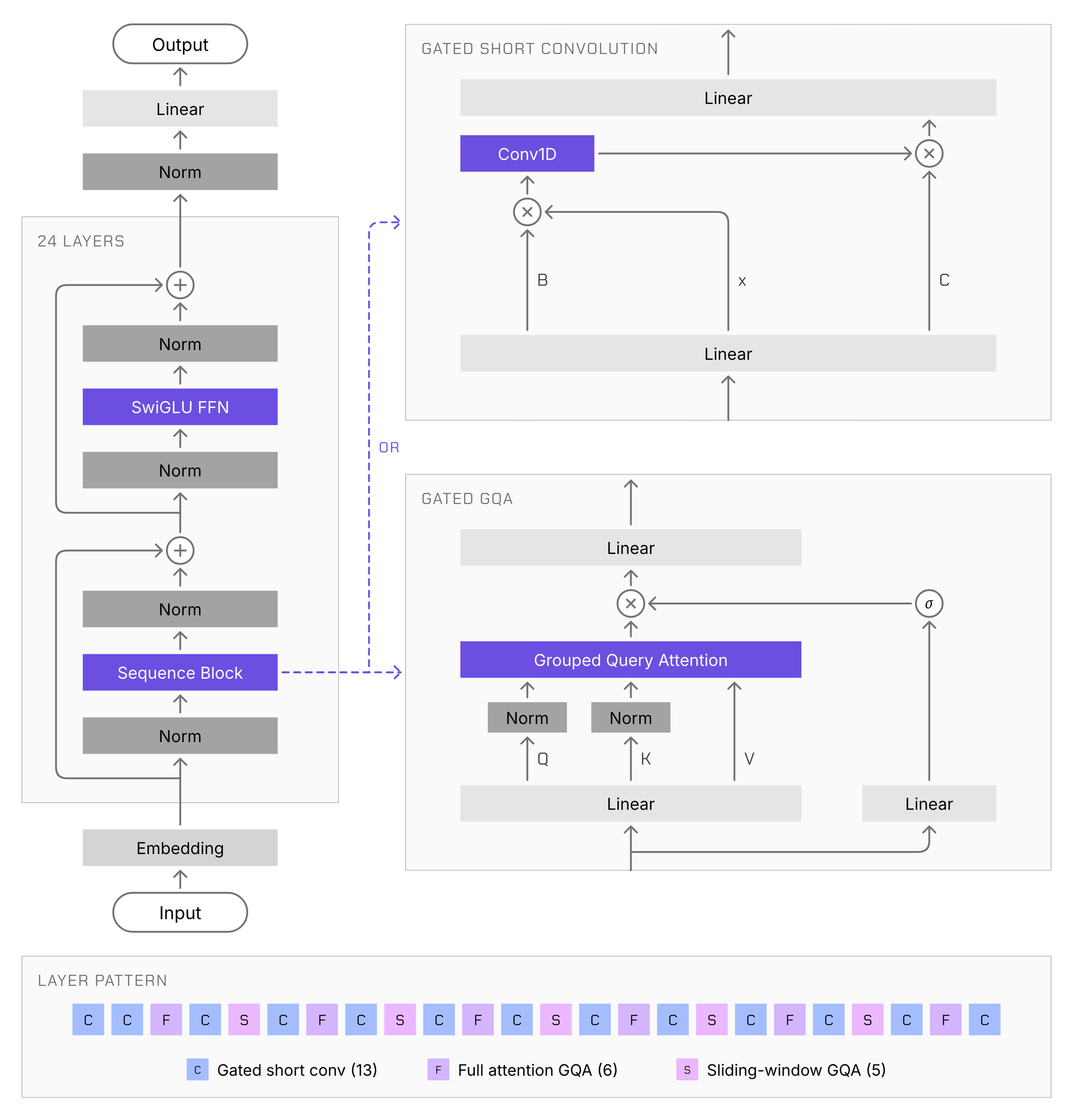
LiquidAI unveiled LFM3 on October 27 local time, a family of customizable AI models built to run directly on devices. Six models in the 2-billion-parameter class, each handling text, images, audio, or decision-making tasks, all start from the same base model. LiquidAI says every model in the lineup can be fine-tuned with a single GPU, letting companies adapt it to their own data and internal terminology.
Six small models, and how to pick one
The idea is to choose the model that matches your input data and the job at hand. Use the text model for reading documents or operating tools, and the vision model for understanding screens and video. LiquidAI says it searched for model architectures against 14 different combinations of hardware and runtime environment, spanning smartphones, laptops, and the cloud.
The text model, LFM3-1.7B, targets agentic AI, meaning systems that carry out tasks on their own. It comes with the ability to call external tools and to respond in a fixed format. According to LiquidAI, compressing the model to 4-bit brings its footprint down to roughly 1GB. The company also expanded how much the model can read at once, so that work involving long documents can be handled on the device itself.
How much has it improved over the previous model
LiquidAI says it shrank the text model while improving how well it gets work done. LFM3-1.7B is 35% smaller than its predecessor, LFM2.5-2.6B. On WebArena-Verified, a benchmark that measures how well a model completes assigned tasks on the web, the company reported the score rising from 3.02 to 38.42. It also claimed better results than Qwen3.5-9B on long-running tasks inside browsers and workplace apps.
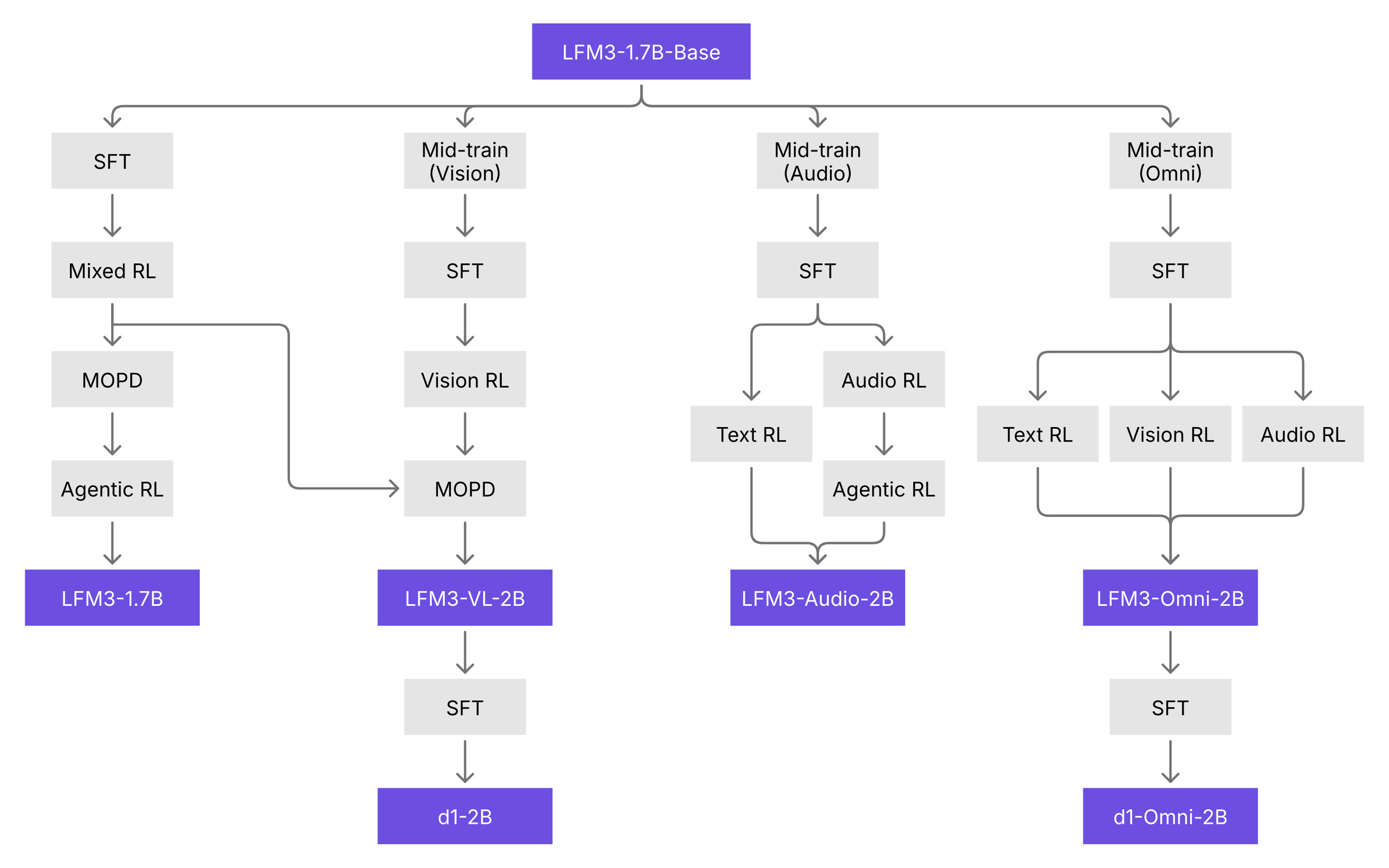
Image: huggingface.co
The vision model, LFM3-VL-2B, is the first LFM vision model to accept video as input. It also adds the ability to detect objects and work out where they are positioned. LiquidAI says it cut the 3.1 billion parameters of its predecessor, LFM2.5-VL-3B, down to 1.9 billion. At the same time, the company says the average score across 62 vision benchmarks rose from 57.6 to 71.4, putting it on par with Gemma 4 12B, a model more than six times its size.
Show it a photo, ask out loud
LFM3-Audio-2B handles voice conversation, speech recognition, speech synthesis, and translation across 18 languages on laptops and other devices. It takes in text or audio, replies in text and speech, and can turn a spoken request into a tool call. LiquidAI says it improved voice quality over the previous version and added a new capability to understand the content of audio and reason about it.
Image: huggingface.co
LFM3-Omni-2B, LiquidAI’s first Omni model, pulls seeing, hearing, and speaking into a single model. Users can show it a photo and ask a question out loud, or have it interpret a video’s visuals and audio together. LiquidAI’s pitch is that it can replace setups that previously stitched together separate models for speech recognition, image understanding, response writing, and speech synthesis. Spoken replies can be heard as they are generated.
The heart of LFM3 is this approach: pick only the capabilities you need, tune them to your own work, and run the result on the device where the actual service runs. For development teams, it offers a path to fine-tuning with a single GPU; for users, conversations that mix photos and voice. Its prospects for use in Korea will depend on the quality of its Korean-language handling, the terms of use, and speed and memory use on actual devices.