Nikon Replaces First-Place Winner in Microscopy Video Contest Over AI Rules Violation
Nikon changed the first-place winner after scientists questioned the cellular structures and movement in the video. The entrant admitted using AI to polish the footage in post-production but said he did not generate the original experimental footage.
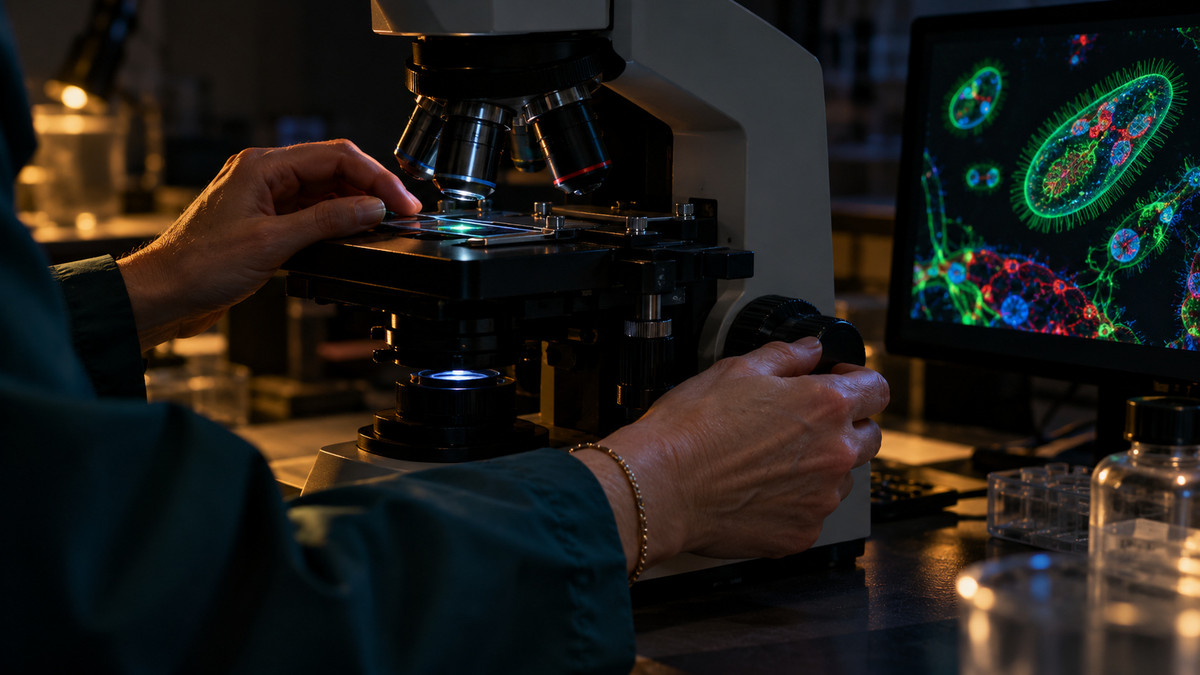
Nikon has named a new first-place winner in its 2026 “Small World in Motion” microscopy video competition. After re-examining the winning video and the materials submitted with it, the company concluded that the entry had not complied with contest rules governing generative AI. The new top prize goes to Nguyen Nam Nhat of Vietnam, for footage of a microscopic nematode and Dileptus, a single-celled organism.
Why the top prize changed hands
The controversy began with the appearance and movement of the organisms on screen. Scientists raised questions about how cilia, the fine hair-like structures on a cell’s surface, and other cellular structures were rendered. In a competition built around what a microscope actually captures, the central issue became whether those structures and motions were genuinely filmed.
The entrant, Ning Xu, acknowledged using AI in post-production to clean up the footage. Xu maintained, however, that neither the original experimental footage nor the movement of the cilia had been generated by AI.
Nikon said it reviewed the video and the accompanying submission materials and consulted with its judges before deciding. The company stressed that it assessed only whether the entry met the contest’s eligibility requirements, and that it was not passing judgment on the entrant’s research record or intent. Its public statement did not specify which parts of the video involved which tools.
What the rules prohibit
The competition accepts video and time-lapse footage, which compresses change over time, captured through a microscope. Videos created with generative AI are not eligible. Organizers may request original footage to verify compliance. That means entrants need to hold on to not just the finished video but also the raw recordings behind it.
Nikon’s “Small World” photomicrography competition began in 1975. The video category was added in 2011 and is judged separately from the stills. This revision affects the video category.
What future entrants should watch
For anyone preparing an entry, the key question is how far AI use can go. In this case, Nikon found a rules violation even after the entrant explained that the AI had been used in post-production. Entrants should read the ban on generative AI video alongside the possibility that they will be asked to produce their originals.
Nikon also said it will review the competition’s rules and judging procedures. Two things to watch: where the line will be drawn on permissible video processing, and how judges will verify originals against submitted entries.