Nvidia Unveils Flora, a System for Organizing Robot Training Video
Three models that split video into actions and attach descriptions and scores. Nvidia estimates it costs about 1/125 as much as GPT-6 Astra on a specific task. It can be downloaded and used in Korea for non-commercial research.
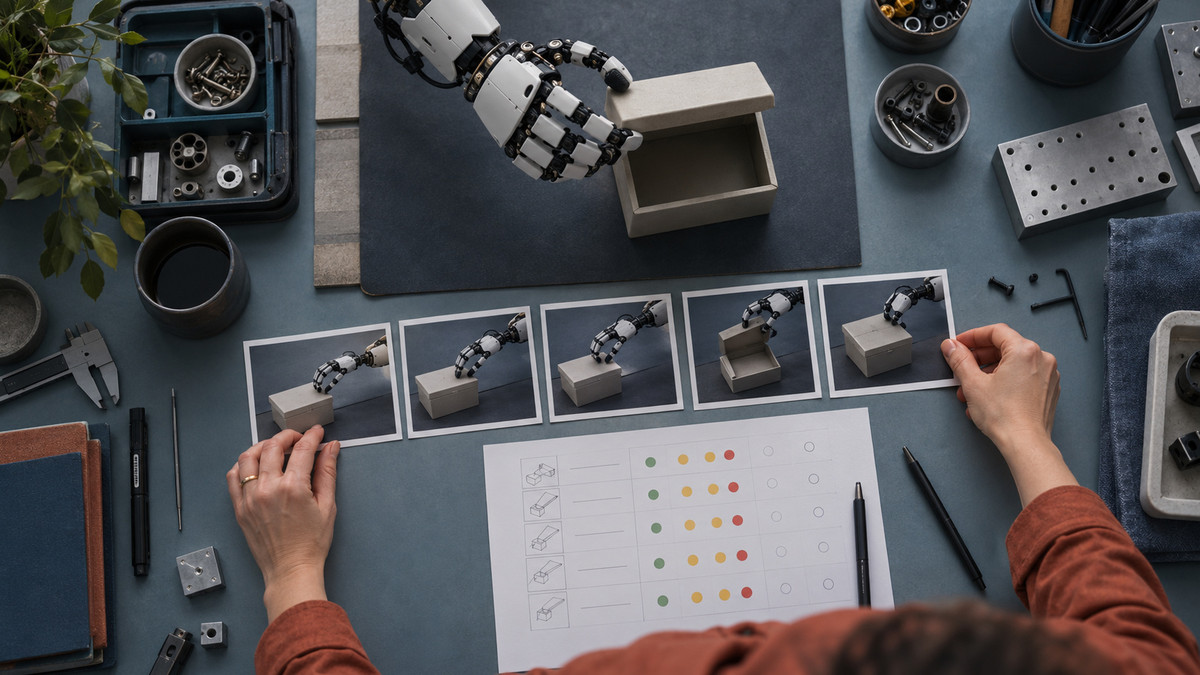
Nvidia has released Flora, a system that attaches action descriptions and quality scores to video used for robot training. The company put out three models along with accompanying research materials. The official model card lists October 15 as the release date. Nvidia says it used Flora when training GR00T, its own robotics model.
What it pulls out of video
Flora turns the behavior captured in a video into data that can be used for training. TempSeg identifies where a human or robot action begins and ends. Captioner describes the action in each segment as an English instruction. Rewarder assigns scores for how successfully the overall task was completed and for the quality of the actions in short individual segments.
Flora is not a model that moves a robot itself. GR00T N1, which Nvidia released in 2025, is the model that lets a robot reason and act. Flora prepares and evaluates the data that models in that family learn from. It sits at the stage of organizing what actions occurred in a video and how well they were performed.
Where the 125x cost gap comes from
Nvidia says it processed 200,000 hours of video per day using 512 GB300 GPUs. On the specific task of attaching captions to video, the cost of processing one hour of source footage was roughly $0.72 for Flora, versus $88.49 for GPT-6 Astra running with its deep reasoning feature turned up to maximum. On that basis, Nvidia estimates that Flora costs about 1/125 as much as Astra.
The two figures are not measured the same way. The Flora number is an estimate calculated on assumed GPU rental costs, while the Astra number is the usage fee a developer pays to plug the service into an application. Astra is a general-purpose model used for many things, whereas Flora is a bundle of models tailored to the job of captioning robot video.
Benchmark results varied by category. According to the results Nvidia published, Flora scored higher on finding action segments in videos of humans manipulating objects. It also showed smaller error on RoboReward, a test that evaluates task performance. Astra, on the other hand, came out ahead on segment detection in robot manipulation video and on some action-description accuracy measures in WGO-Bench.
Is it available in Korea?
The official model card lists worldwide distribution, and Korea is included. Researchers and developers can download the models and use them for non-commercial research and development. Nvidia does not permit commercial use or deployment in live production environments. The instructions Captioner produces and the training text are in English. Flora’s output consists of descriptions and scores attached to video; it is not intended to control robots directly or to serve on its own as a safety monitor.
Korean research teams can use the released models as well, though they will need to weigh the non-commercial scope and the English-only output. The open question going forward is whether the cost savings and the captioning accuracy hold up together on each team’s own footage.