Google: Southeast Asia's Digital Economy Projected to Reach $368B This Year, Powered by AI Shopping
Google, Temasek and Bain & Company project 17% growth for the region's digital economy in 2026. With more people using AI to shop and plan trips, the next challenge is building the trust needed for consumers to let AI complete purchases.
The “e-Conomy SEA 2026” report, released by Google on October 21, projects that Southeast Asia’s digital economy will reach $368 billion in gross merchandise value (GMV) this year, 17% more than last year. The report, co-authored by Google, Temasek and Bain & Company, points to rising AI adoption as the engine behind that growth.
According to the report, 243 million people in Southeast Asia are active users of generative AI, equivalent to 58% of the working population. The analysis finds AI is spreading four times faster than mobile internet did. The digital economy is expected to surpass $1 trillion by 2035.
How shopping and travel are changing
In e-commerce, AI is being used in the discovery phase and in the decision to buy. The report describes searches that combine text and images, along with in-app AI assistants that help shoppers work through difficult purchases. These personalized recommendations lift conversion rates by 10% and increase order volume by as much as 75%, the report says. E-commerce transaction value is forecast at $226 billion this year, up 18% from last year.
For trip planning, generative AI has overtaken social media as a go-to tool. Search engines remain the most used tool for building complex itineraries, with generative AI in second place. Online travel transaction value is projected at $59 billion, a 10% increase. In transport and food delivery, better routing and proactive recommendations are saving consumers time, according to the report.
Will people hand price comparison and checkout to AI?
The next shift the report highlights is AI that completes purchases on a user’s behalf. Some 72% of users already rely on everyday automation features such as price tracking. And 75% said they would be willing to let an AI agent, software that carries out tasks on its own, handle price comparison and close a transaction. That goes a step beyond receiving product recommendations, extending to the purchase itself.
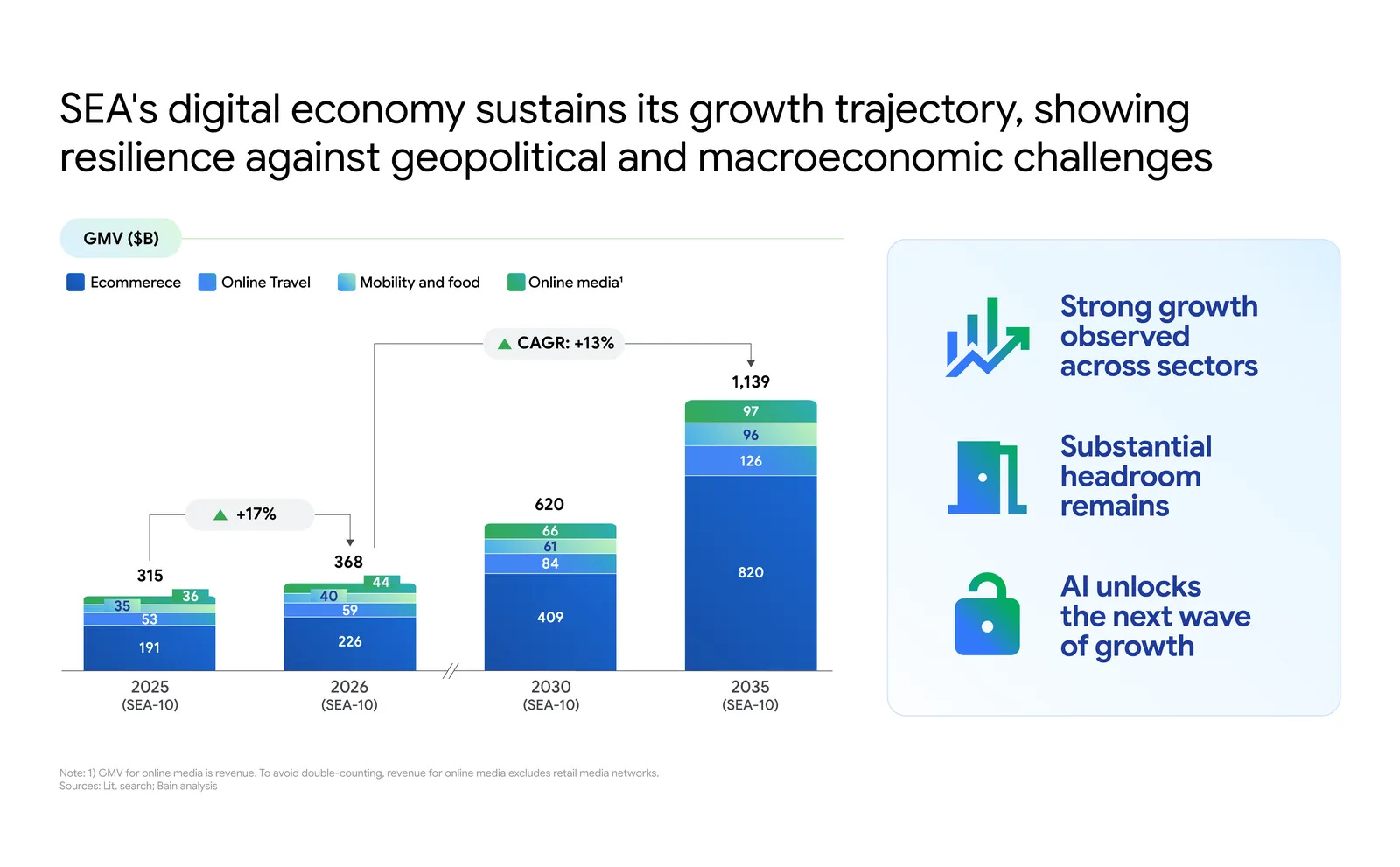
Image: Google
Alongside that willingness came calls for safeguards. Privacy protections were cited by 44% as a condition for using new features with confidence. Another 36% said AI must clearly communicate what it can and cannot do, while 30% said they need the ability to reverse a transaction an AI has completed. And 62% said they trust AI tools more than they did a year ago.
Why data center capacity needs to triple
The report stresses that costs and infrastructure must change to keep up with a 60-fold increase in AI usage. For businesses to hand off multistep workflows to AI from start to finish, operating costs need to fall and the practical value needs to rise. Data center capacity will have to roughly triple over the next five years, the report adds. Improving energy efficiency and making clean energy easier to access were also listed as conditions.
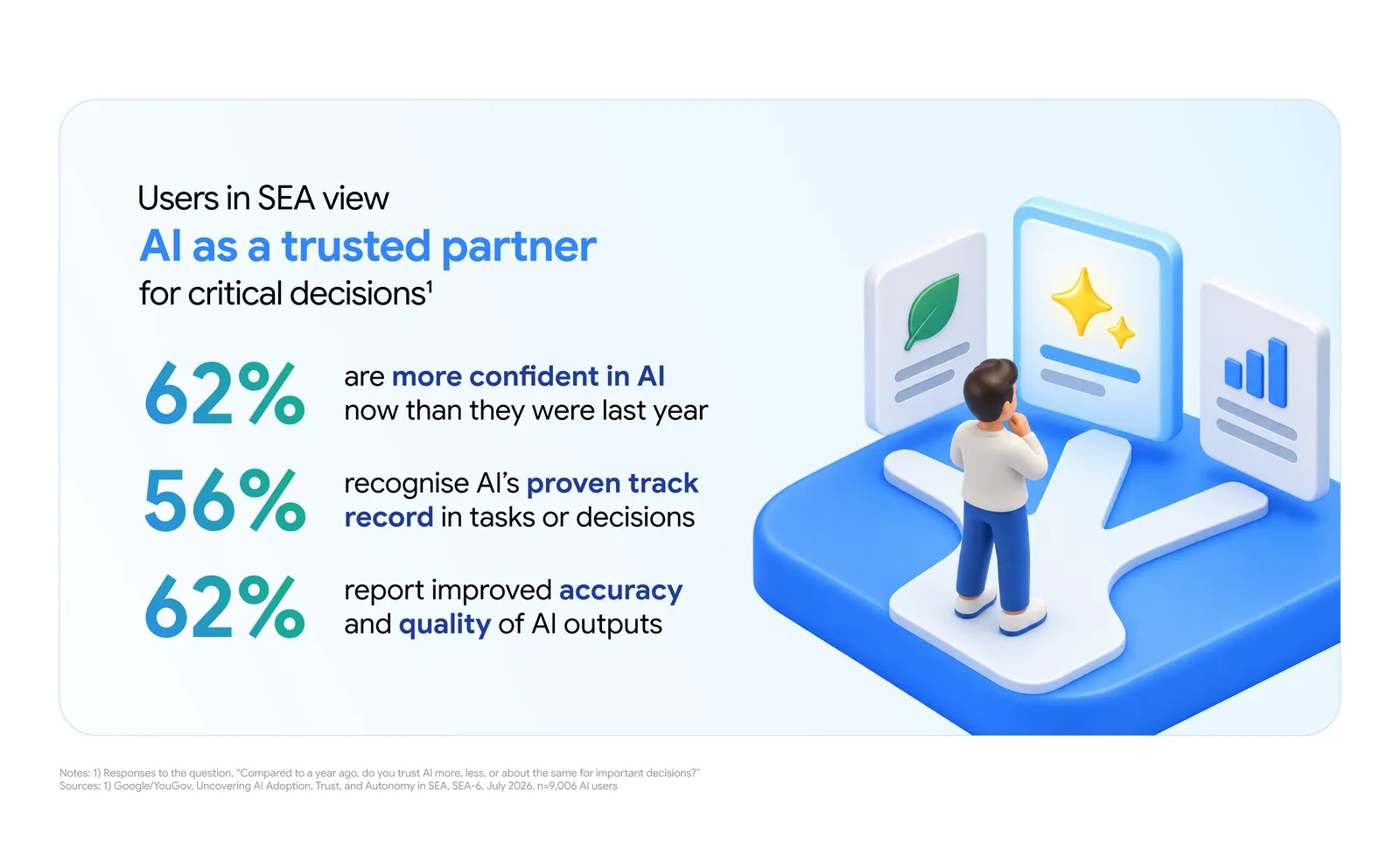
Image: Google
Consumers are moving from using AI to find information toward entrusting it with actual transactions. Korean companies serving Southeast Asian consumers would do well to examine how they handle price comparison and purchase assistance. The key question is how much of that stated willingness to delegate purchases translates into real usage. Whether privacy protections, transaction reversal features and lower operating costs come together will determine that outcome.