17 of 211 Claude-Designed Proteins Bound to Scorpion Toxins
Anthropic has released experimental results for 211 proteins designed by Claude. 17 cleared its toxin-binding threshold, but the company says it has yet to show that any of them neutralize venom.
On October 20, Anthropic published the results of a study in which Claude designed small proteins that bind to scorpion neurotoxins. Of the 211 designs that were tested in the lab, 17 cleared the binding threshold the company had set. Anthropic said it is releasing all 211 designs along with the experimental data so that others can build on the work.
The project used an internal research version of Claude rather than a consumer product. The initial question came from Citrini Research, an investment research firm, and Anthropic worked with the firm to refine the instructions given to Claude. The goal was to see whether someone without specialist training could take on a real health problem with AI’s help. Anthropic’s research team narrowed the problem space together with Claude and settled on scorpion neurotoxins. The work extends the protein design research the company published in August to a specific target.
How much did Claude do on its own?
Claude worked from an initial prompt plus four follow-up instructions. The research team chose which regions to target. From there, Claude selected the toxin structures to use for the designs and picked five amino acid positions on each toxin for its binders to target. It also set the criteria for filtering candidate designs and devised a strategy for going after multiple toxins at once. Anthropic said Claude handled a substantial share of the work on its own, and that under researcher supervision it also took on the data analysis and the write-up.
Over 64 hours, Claude generated 318,484 designs and selected 180 of them as experimental candidates. Researchers, with Claude’s help, added 31 more, bringing the total to 211. The computation consumed roughly 10,000 GPU hours. Adaptyv Bio and Twist Bioscience then tested all 211 to see whether the binding predicted computationally actually occurred.
Does binding to a toxin make a protein an antivenom?
Each of the 17 designs that passed testing bound a single toxin, and together they covered four toxins. Five toxins were studied in all, but no design met the criteria for binding multiple toxins at once. The designs were also checked for binding to an unrelated human protein.
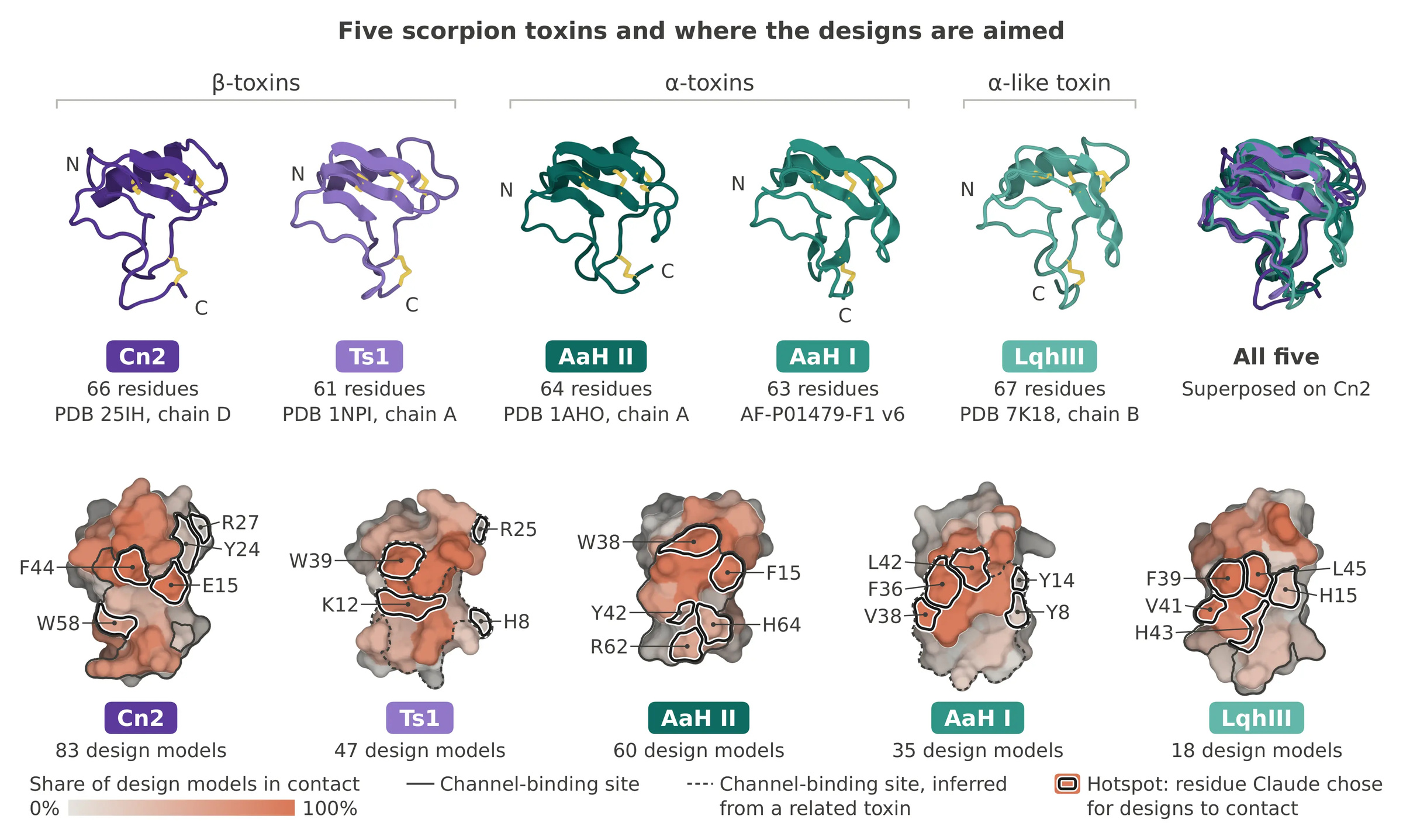
Image: anthropic.com
Anthropic said it has not confirmed whether these proteins neutralize scorpion venom in a cellular environment, and that it is not claiming to have produced an antivenom. What the results represent is an earlier stage: identifying candidate proteins that target the toxins, well before any therapeutic development.
What still stands between this and a drug
According to Anthropic, at least 1.2 million people are stung by scorpions each year, and more than 3,250 die. Existing antivenoms are made largely by harvesting antibodies from the blood of horses that have had an immune response provoked by scorpion venom. Production can take months, and in many regions cost and supply are problems, the company said. This study tested an alternative approach: designing proteins from scratch on a computer to target specific toxins.
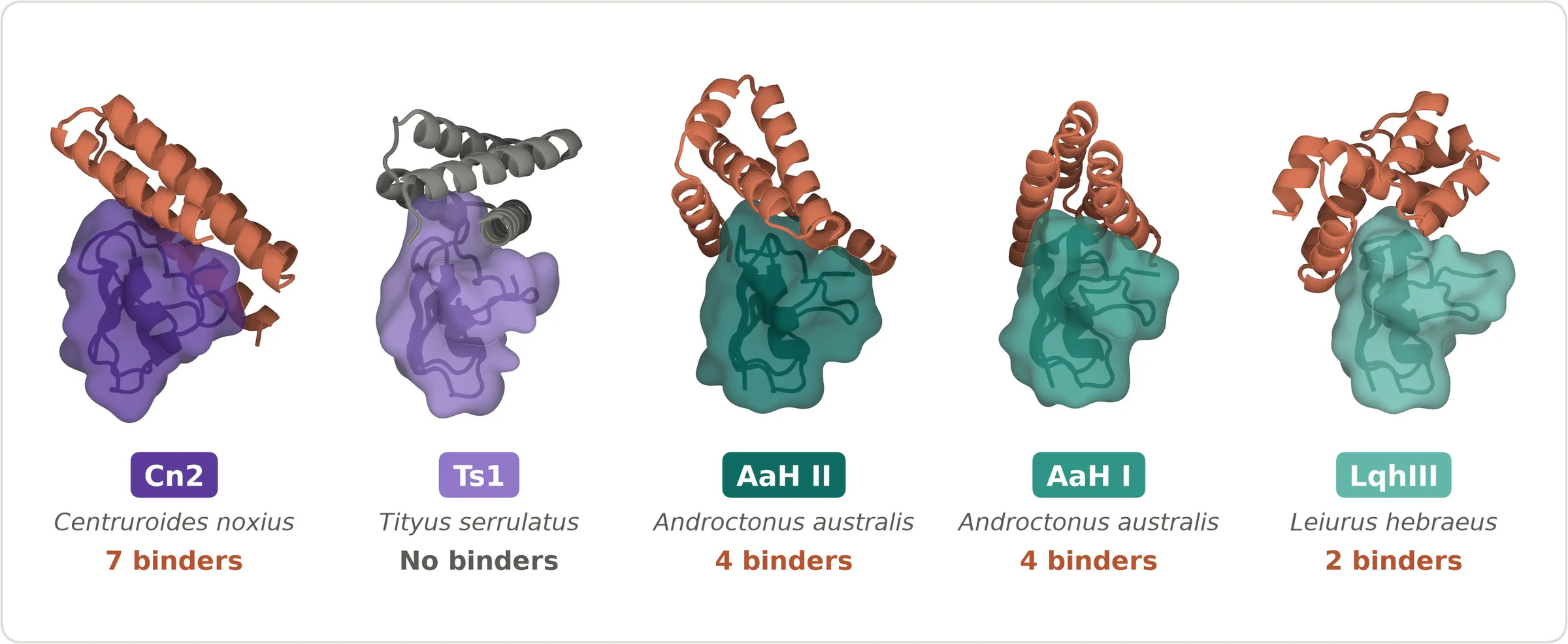
Image: anthropic.com
AI-generated designs led to candidates worth validating in the lab. Outside experts who reviewed the work called it a promising first step. Susana Vázquez Torres of Spain’s National Cancer Research Centre stressed that turning binding into real-world efficacy means solving the drug development challenges that come after it. Whether these candidates can neutralize venom, and then become a safe and affordable medicine, is the next hurdle.