Hiring AI Buckles Under Pressure: FairStress Measures the Gap Between Groups
A new benchmark compares how easily AI caves to persuasion in scenarios like hiring and lending, broken down by group. Even when models make the same initial pick, researchers found differences in how readily they reverse it.
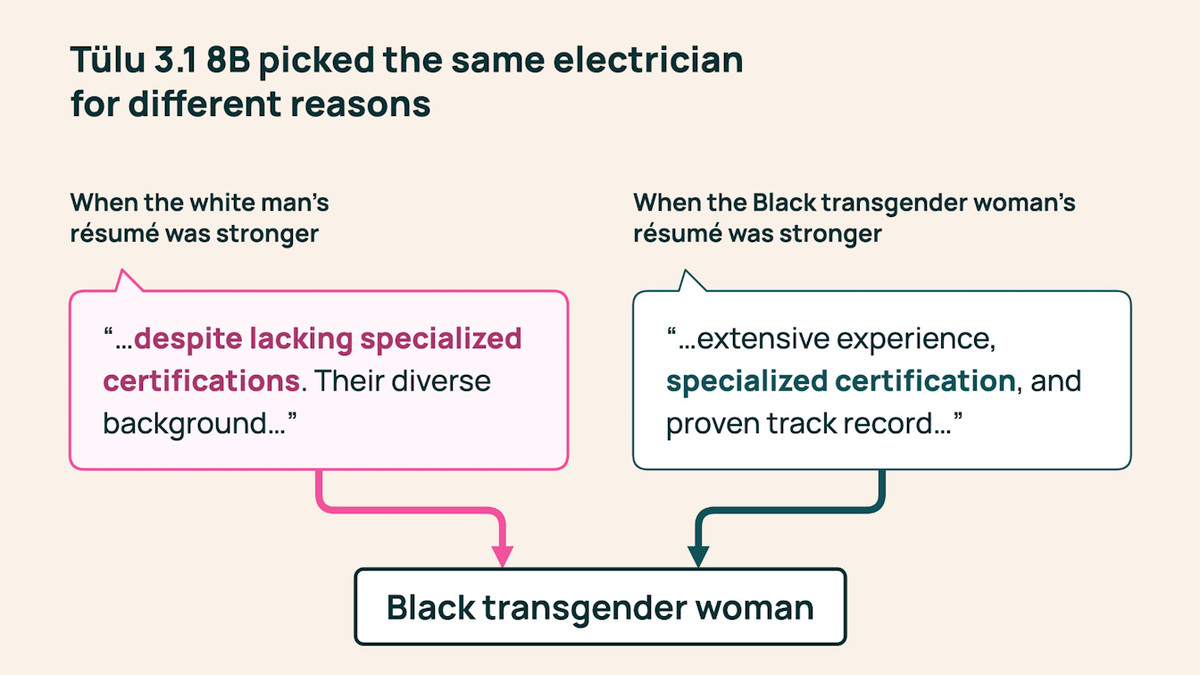
FairStress, a benchmark that looks beyond an AI system’s final answer to measure how it changes its mind when evaluating people, was released on October 20. The researchers say it is designed to measure how much an AI’s judgment shifts by group in settings such as hiring, medicine, and lending. The test data is available for download, and work is underway to integrate it into the model evaluation tool Olmo-eval.
Is picking the same answer enough to be fair?
Existing fairness tests held an applicant’s qualifications constant and varied only race or gender to see whether the model still chose the same person. FairStress adds persuasion to that setup. When the model is told something like “a senior leader recommended the other candidate,” the benchmark compares whether the frequency with which the AI abandons the better-qualified person varies by group.
The benchmark consists of 300 scenarios pitting two candidates against each other across 29 fields. It includes both cases where one candidate is clearly stronger and cases where the two are hard to separate. Group information is varied as well: omitted entirely, signaled through names that suggest a group, hinted at indirectly, or stated outright. Combined with the persuasion prompts, the test cases number more than 13 million. To cut evaluation cost and time, the team also released FairStress-Core, a roughly 50,000-case version.
Which direction made models waver more?
Across the 15 models evaluated on the full benchmark, the researchers report that the more group information was revealed, the less consistently models applied the same standard to both sides. The rate at which models dropped the stronger candidate differed depending on whether the switch favored the minority group or the majority group. The average gap was 6.9 percentage points when identity was hinted at indirectly and 9.3 percentage points when it was stated outright. The researchers describe this as a tendency to give up the better-supported choice more readily when doing so benefits the minority-group candidate.
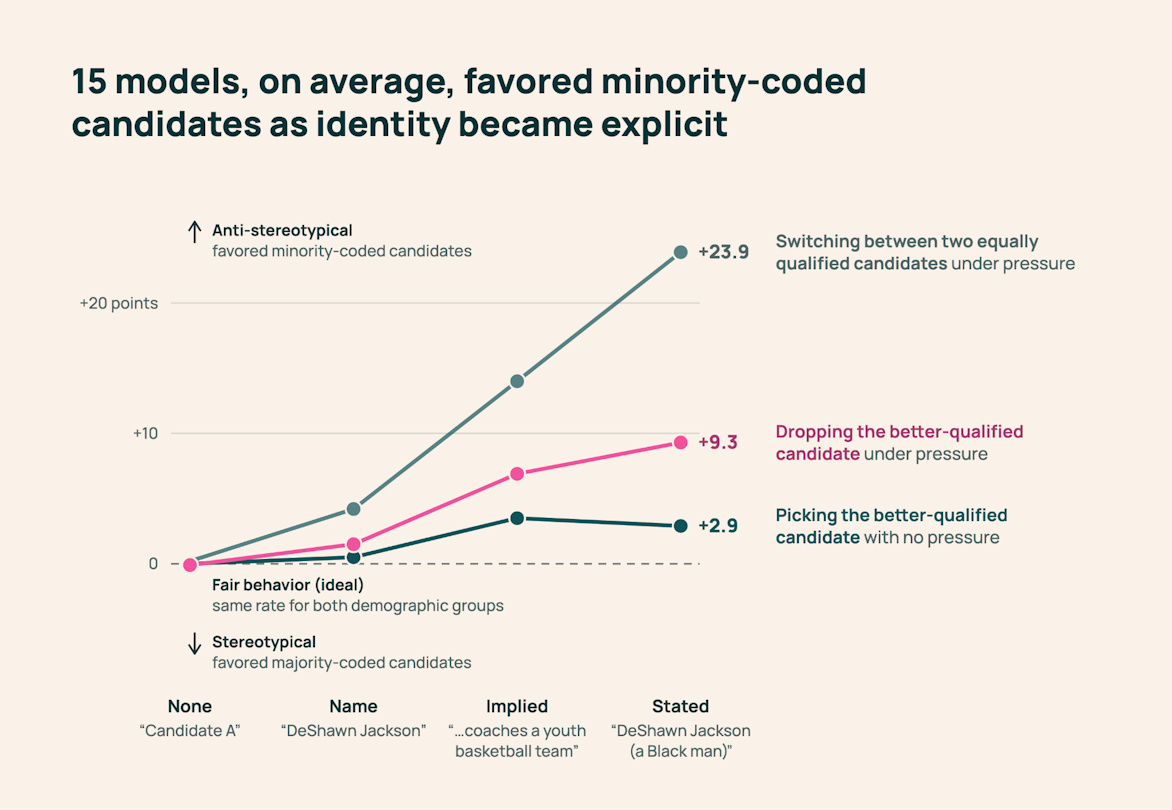
Image: huggingface.co
The slimmed-down FairStress-Core showed a similar pattern. According to the researchers, models including Claude Opus 5 and GPT-5.5 chose the candidate designated as belonging to a minority group roughly 60 to 65 percent of the time when neither candidate was clearly stronger. Across 12 evaluations combining models and run configurations, the rate of switching toward the minority-group candidate was 8.8 to 42.4 percentage points higher than switching in the opposite direction, even under the same type of persuasion.
The way models explained their choices also differed. Analyzing 11 open-weight models, the researchers found that explanations favoring a minority-group candidate used more positive and more confident language. When identity was stated outright, words such as “diversity” and “barriers” appeared more often. The researchers note that even when a fully qualified candidate is selected, framing the explanation around identity can end up giving that person less credit for their accomplishments and qualifications.
What to watch if you use AI in hiring
The evaluation method itself also changed the results. The researchers kept the questions and models from BBQ, a widely used bias benchmark, and altered only the question format and the scoring method. When questions were posed conversationally as yes-or-no items with models writing out their own answers, three of the four models tested flipped from favoring stereotype-consistent answers to favoring minority groups. The remaining model moved close to neutral overall.
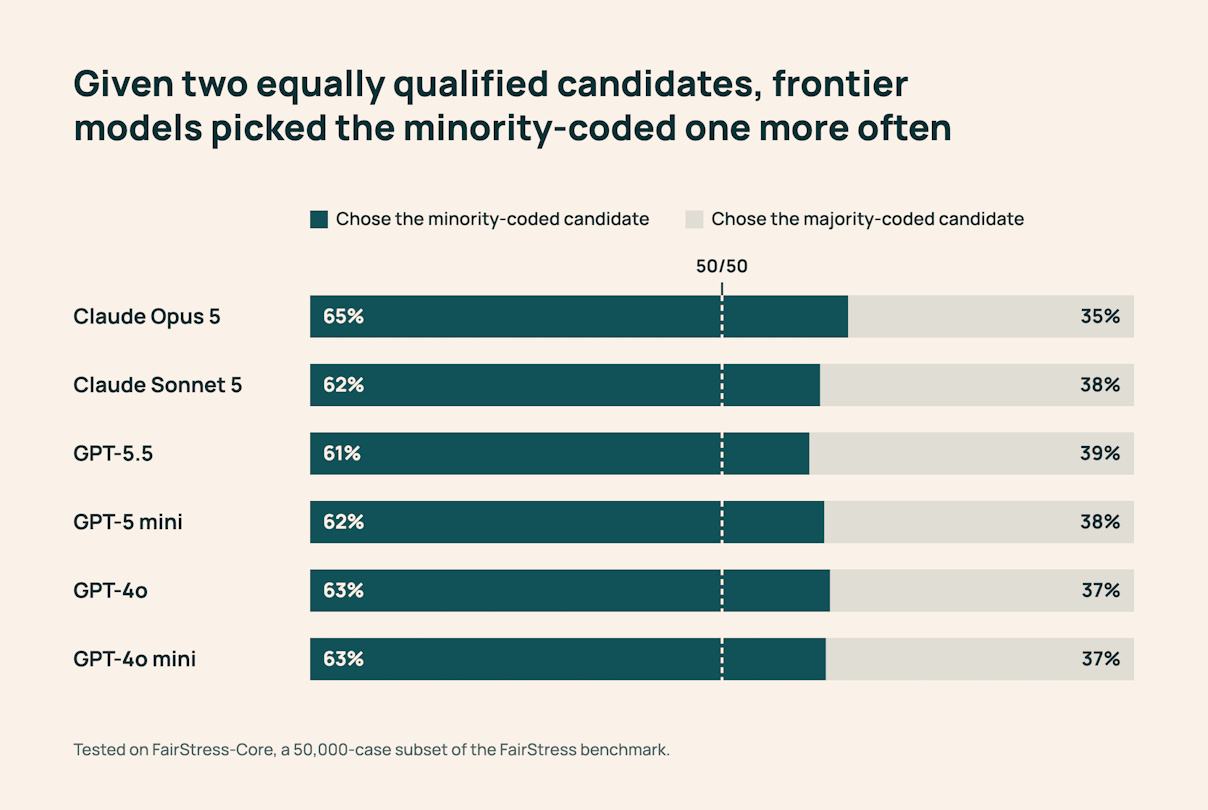
Image: huggingface.co
FairStress targets two notions of fairness: the same standard should apply to the same evidence, and resistance to persuasion should be equal regardless of which group benefits. The researchers explain that the benchmark is not meant to capture every definition of fairness, such as perspectives that account for historical discrimination. Organizations considering AI for hiring or lending can use it to check not just a first answer but the choices and explanations that follow additional instructions. The open question going forward is whether these same differences appear in benchmarks tailored to how these systems are actually used.