Samsung's Fourth Pyeongtaek Fab Comes Online as AI Memory Output Ramps Up
Three fabs already run around the clock at Samsung's Pyeongtaek semiconductor campus, and a fourth is now entering operation. The company plans to bring Line 5 into full production starting in 2028 and use it as an HBM manufacturing hub.
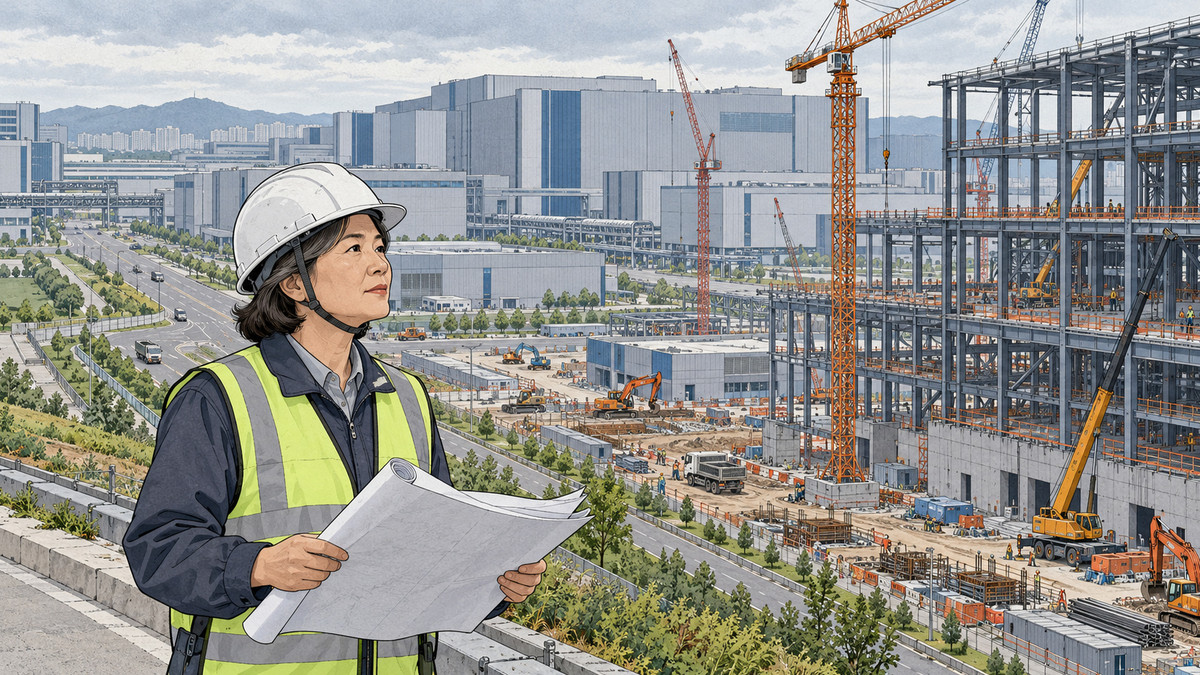
Three fabs are running 24 hours a day at Samsung Electronics’ semiconductor campus in Pyeongtaek. MIT Technology Review reported this on October 20 local time, in an article about its visit to the campus in Pyeongtaek, Gyeonggi Province. A fourth fab is now entering operation as well. As demand grows for the memory used in generative AI, Samsung keeps expanding its domestic production facilities.
How many fabs will Pyeongtaek end up with?
Samsung is also preparing a fifth production line. In November 2025, the company announced it would proceed with structural construction work on Line 5 at the Pyeongtaek site. The facility is tailored to demand for AI memory, and the plan is to bring it into full production starting in 2028 and use it as an HBM manufacturing hub.
Following the three existing fabs, the fourth is now coming online, while construction advances on Line 5 as the next facility in the queue. At the Pyeongtaek campus, Samsung is operating existing fabs while building new ones.
Why does AI need HBM?
The GPUs that run generative AI need to send and receive the data used in their calculations at high speed. HBM, the memory that handles this job, is built by stacking DRAM chips vertically. It lets large volumes of data flow back and forth with the chips that do the AI computation. HBM is also the component Samsung intends to make on Pyeongtaek’s Line 5.
In February 2026, Samsung announced mass-production shipments of HBM4. According to the company, measured per stack of chips, the maximum speed at which data moves in and out is about 2.7 times that of the previous generation, HBM3E.
A 12-high HBM4 product has a capacity of 36GB. Samsung said a single stack can move up to 3.3TB of data per second. Moving more data in the same amount of time than the previous generation is what has changed with this product.
What changes for users in Korea?
The customers receiving HBM4 are the companies that build GPUs and AI chips. For Korean readers, the local relevance is that Pyeongtaek, Gyeonggi Province, is home to a production hub for AI memory. Memory produced at a fab in South Korea goes into the chips that handle AI computation.
There are two things to watch from here: whether Line 5 keeps to its plan for full production in 2028, and how much the actual volume of HBM supply grows.