llama.cpp b11729 Released, Reads Bidirectional Attention Setting When Converting Qwen3
llama.cpp, a tool for running AI models on a personal computer, has reworked how it handles Qwen3. A Qwen3-based model tuned to tone down the telltale AI writing style also surfaced in the community.
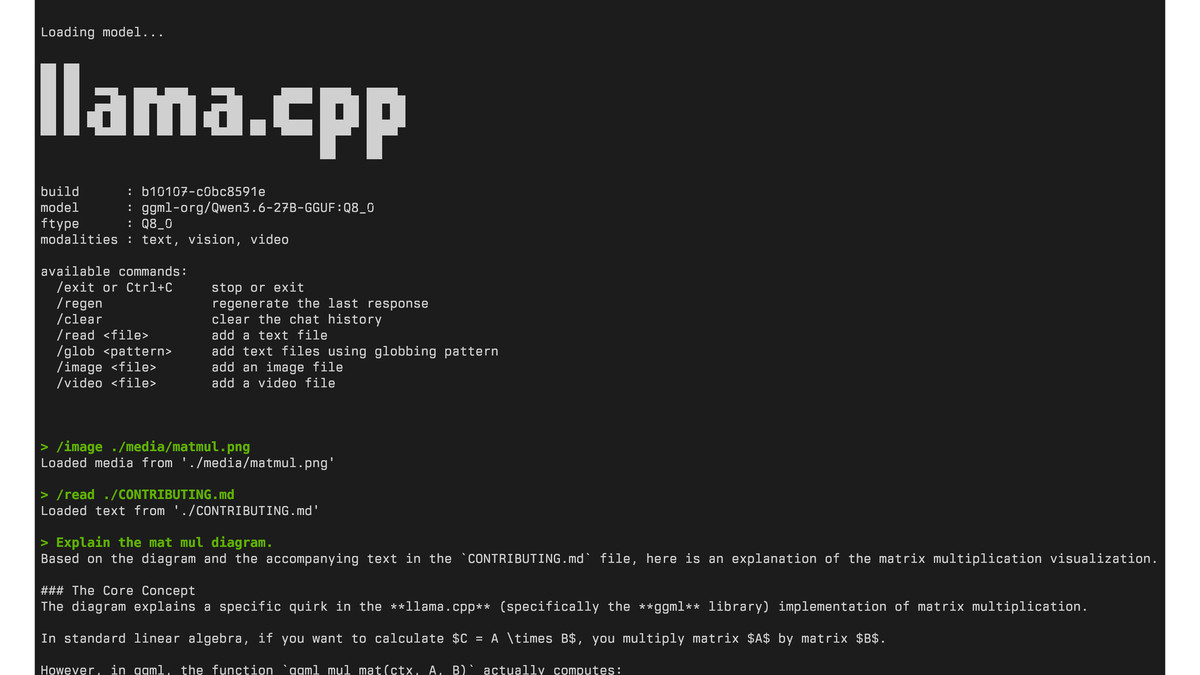
ggml-org released llama.cpp b11729, a new build, on October 19. llama.cpp is the software people use to run AI models directly on their own computers. This release reworks how the project handles models in the Qwen3 family. It adds support for reading a sentence from both directions at once (bidirectional attention) and for dense_2 output projection. A related fix makes the conversion process, which turns a model into a format llama.cpp can use, read the model’s configuration to determine whether this bidirectional mode is in use.
The changelog also lists an update to the model conversion code. Grok is credited for development assistance, and Sigbjørn Skjæret is listed as co-author. The release assets include files for macOS on Apple silicon and Intel, as well as for iOS. Among the Apple silicon builds, the configuration with KleidiAI enabled is marked as disabled.
Separately, the community saw the debut of qwen3-4b-deslop-v4, a distinct project. Its creator says they fine-tuned Qwen3-4B on a MacBook Air using 161 responses. According to the creator, the result cuts down on the telltale AI writing style without needing any special instructions in the prompt. They add that it can be run locally with Ollama.
Two things are worth checking for users: whether your particular model actually needs this fix, and whether a model tuned for writing style genuinely helps you produce the kind of prose you want.