llmspeed lets you preview your PC's AI speed before buying a graphics card
Pick a device and a model, and it shows you right on screen how long you wait for a reply and how fast the text streams out. It mixes directly measured numbers with estimates, and the developer notes that real-world speeds can differ by 10 to 30 percent.
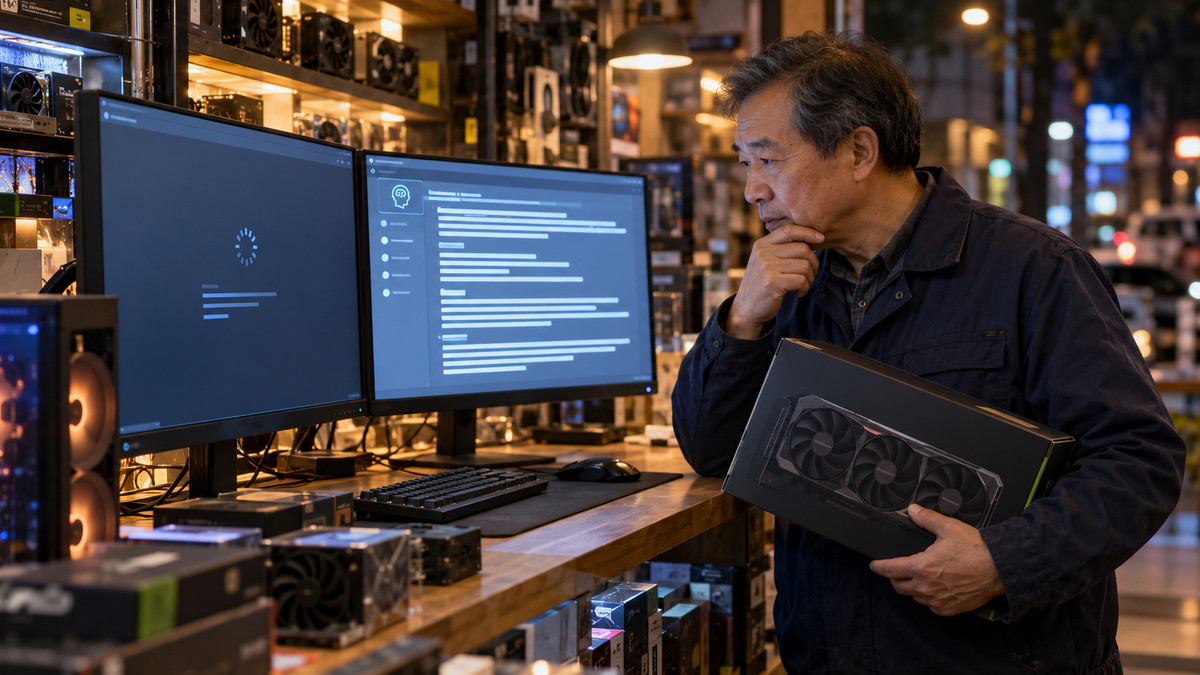
An independent developer introduced llmspeed, a web tool for comparing AI inference speeds, on Hacker News’s Show HN board on October 17 (local time). It is aimed at people who want to run AI models on their own computers and would like to estimate response speeds before buying parts. Pick a device and a model, and you can immediately see on screen how long you would wait before a reply begins and how quickly the text keeps coming after that.
llmspeed runs in the browser with nothing to install. The developer had already introduced the tool once before, in August 2026. At the time of the tally, this Hacker News post had a score of 89 points and 38 comments.
Which device is faster?
You can line up two configurations side by side and compare their speeds. The idea is to pick a different device and model for each, then compare how long the wait is before a reply starts and how fast the text flows afterward. Rather than just showing tokens per second as a number, the tool simulates the way text actually streams out.
It also tells you whether the model you picked fits entirely in that device’s memory. If a model is too large and part of it has to be offloaded to the computer’s regular system memory, the tool flags that. According to the developer, users can choose from 30 hardware options—graphics cards (GPUs), Macs and CPUs combined—plus 15 models. Across all that hardware, five execution backends are covered: CUDA, Metal, ROCm, Vulkan and CPU.
llmspeed is not the only tool for getting a feel for speed before you buy. LapTime also lets you get a feel for how long a reply takes to start and how quickly text is generated on different hardware. llmspeed shows a speed comparison of two configurations and whether the model fits in memory, all on one screen.
Are the speeds on screen actually measured?
The replies reproduced on screen are not the result of running the model on the chosen device on the spot. llmspeed labels its figures by category: values measured directly on the same configuration, values estimated from measurements of similar configurations, and values predicted from hardware specifications alone. When there is no measurement on record, it calculates an expected speed based on memory bandwidth and compute performance.
Actual performance may differ from the estimates. The developer states that actual speeds can diverge from the estimates by 10 to 30 percent depending on drivers, the AI runtime, power limits and thermals. Multi-GPU setups are not yet simulated.
Users in Korea can use it the same way, by visiting the website and choosing a device and model combination. The source code is published under the MIT license. The value of llmspeed is that it lets you feel, before you pay for the parts, how long you will be waiting for an AI to produce an answer.