Claude Redesigns Eight Quantum Circuits, Cutting a Key Step's Cost to One-Twelfth
Anthropic says Claude Mythos 5 cycled through design and automated scoring until it found circuits that use fewer computing resources than the best published versions. In one key step of a quantum optimization algorithm, the company says, the computational cost fell to roughly one-twelfth of what it had been.
On October 16, Anthropic published research on using Claude to improve quantum circuit design. According to the company, Claude Mythos 5 produced new designs for eight fundamental computing circuits used in chemistry, optimization, and physics simulation. In all eight cases, the new designs reduced both the number of qubits and the number of operations compared with the most efficient designs published to date. A qubit is the basic unit in which a quantum computer stores information.
Why quantum computers have to economize
Today’s quantum computers have very little headroom. Anthropic notes that the machines built so far have anywhere from a few hundred to a few thousand qubits, far short of what many of the algorithms expected to deliver practical benefits would require. There is also the problem of computational errors piling up because of outside influences such as heat and vibration. That is why circuit designs that accomplish the same job with fewer resources matter so much.
There is precedent for redesigned circuits slashing the amount of computation needed. For FeMoco, a compound involved in how bacteria produce ammonia, the number of a particular kind of operation required to run the calculation was estimated at roughly 50 trillion in 2017. As the algorithms improved, that estimate came down to about 340 million. Anthropic points out that the change was driven not by better hardware but by redesigning the computing circuits themselves.
How Claude did the designing
The researchers described to Claude, in everyday language, what each circuit needed to compute. They paired that with an automated scoring program that checked whether the answer was correct and how many resources it had consumed. Claude wrote the circuit as code, received the score, and revised. Anthropic says no human intervened between the steps of this loop. Scores were calculated by multiplying the qubit count by the number of operations.
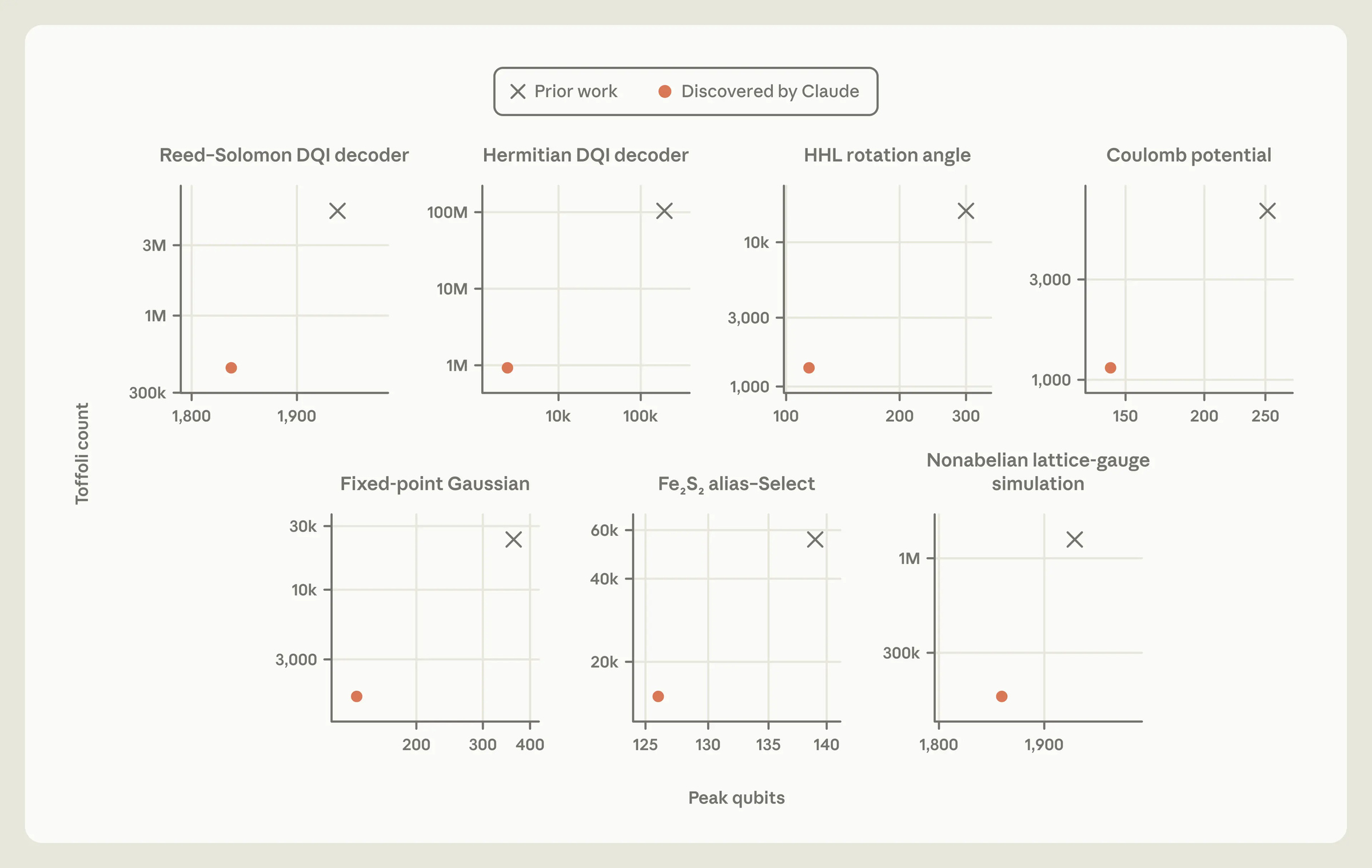
Image: anthropic.com
Anthropic stresses that the work went beyond lightly polishing existing designs. In a circuit that simulates a molecule made of iron and sulfur, Claude identified a repeating structure and arranged for a result computed once to be reused. In another circuit, it found a part where costs ballooned because of handling an input that arrives only very rarely, and changed the design accordingly. In one quantum optimization algorithm, the company says, the computational cost of the most expensive step was brought down to about one-twelfth of its previous level.
How much did humans step in?
For a calculation that combines two points on a mathematical curve, the search ran for 53 hours. That calculation is repeated many times inside larger quantum algorithms, so it has an outsized effect on total resource use. The researchers initially laid out the task in about a paragraph. After that, their involvement amounted to occasionally asking Claude to consider broader approaches. Anthropic says Claude found a novel method with this minimal level of human guidance.
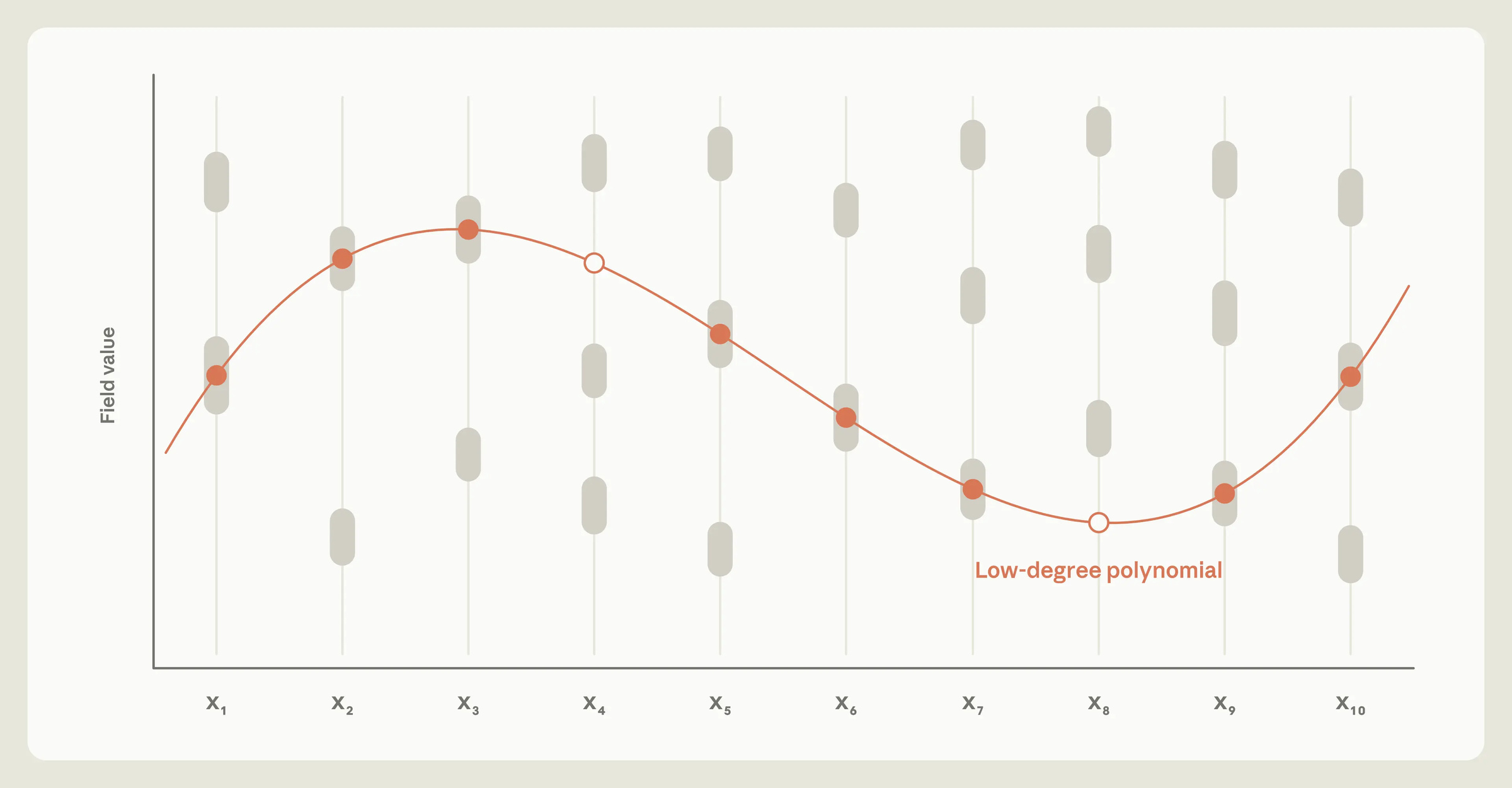
Image: anthropic.com
During the search, ideas that passed small tests sometimes failed on larger problems. Claude tried an approach in which, rather than storing a separate record of the information needed to reverse a computation, it reconstructed that record from the computed result. But the reconstruction rule it built early on stopped working when tested with 256-bit numbers. Re-checking candidate designs at realistic problem sizes became part of the research process as well.
The work is an attempt to reduce the quantum computing resources needed for calculations relevant to new drugs, batteries, and fertilizer. Anthropic suggests that AI-driven circuit redesign could pull forward the point at which such applications become practical. The open question is how much the savings achieved in these fundamental circuits translate into gains across full algorithms and on real hardware.