OpenAI Offers US University Labs Up to a Year of Free Accounts, Plus a Life Sciences Model
Up to 30 people per lab can use accounts at no cost for as long as 12 months. Access to GPT-Rosalind, a model built for life sciences, requires separate approval.
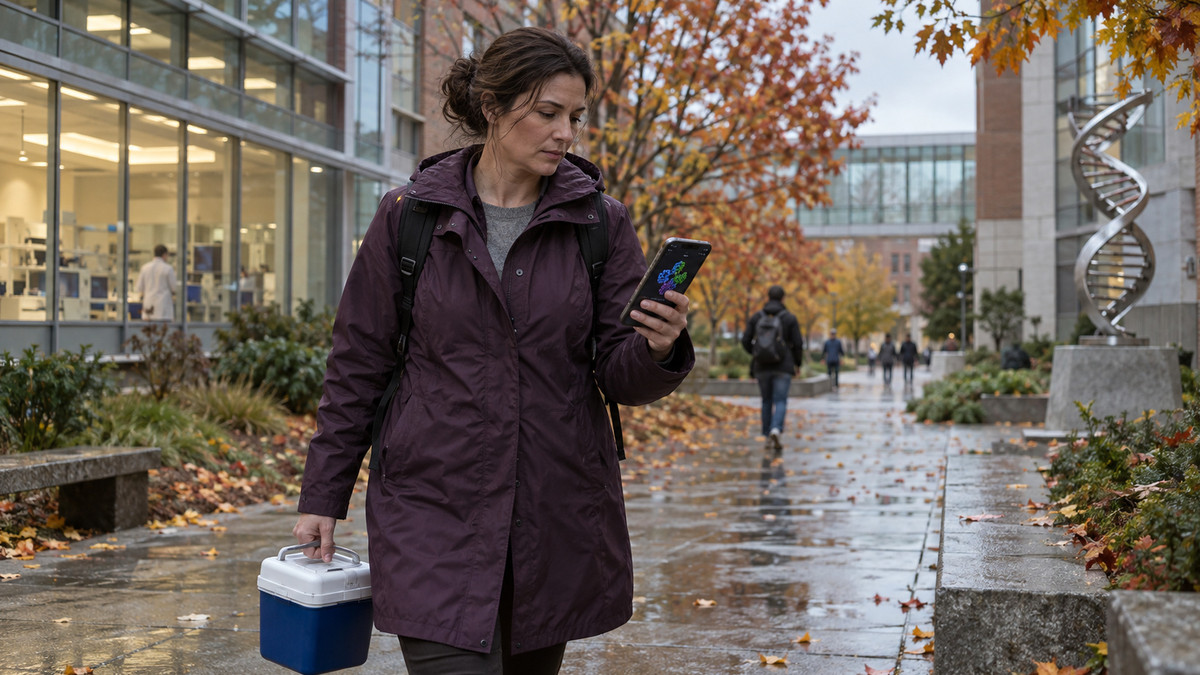
On October 15 local time, OpenAI announced the Rosalind Academic Plan for university research labs in the United States. Under the plan, OpenAI covers account costs for eligible labs and offers them a chance to use GPT-Rosalind, a model specialized for life sciences, along with a set of research tools. Support covers up to 30 people per lab for up to 12 months.
What kind of research is it for
OpenAI says GPT-Rosalind is a model designed to help researchers work through complex biological problems. Alongside it, the Rosalind Workbench provides specialized tools for medicinal chemistry, genomics, and laboratory research. The emphasis is on letting researchers examine life sciences problems while drawing on the relevant tools at the same time.
The application areas OpenAI points to include drug and protein design, disease diagnosis and tracking, and vaccine and immune response research. Gene and RNA therapies, agriculture and animal health, ecology and conservation, and antimicrobial resistance research are also on the list. The company did not release benchmark scores comparing the model’s performance against others.
How far do the free accounts go
Eligible labs get a Business Standard account at $0 per user per month. In effect, OpenAI picks up the account cost within the limits of 30 people and 12 months. Within the usage caps set by the plan, the company says labs can also use the top-tier models OpenAI sells commercially.
GPT-Rosalind itself, however, requires separate approval. A lab must qualify for account support and then clear a trust-based access review before it can use the model. API access, the route developers use to plug a model into their own services, is not part of this plan.
Who applies and who manages it
Applications are open to academic research labs at US universities. If a university does not already have an OpenAI Enterprise agreement, a principal investigator or lab head applies on the lab’s behalf. Universities that already hold an agreement follow their own institution’s Enterprise access process. Approved labs can extend access to up to 30 designated members.
Before access is granted, OpenAI verifies the identity and credentials of the institution and the responsible lead. The nature of the research and the intended use are also reviewed, and usage continues to be monitored after approval. Once verified, the principal investigator or lab head manages member permissions and the approved scope of use.
OpenAI also addressed how research data is handled, saying that by default it does not use research data shared through this plan to train its models.
For a limited period, US university labs now have a way to try life sciences AI and research tooling without paying for accounts. For now, eligibility is limited to US universities. It remains to be seen whether the program will expand to other regions, and whether it will produce results in actual research.