Google DeepMind Uses AI to Find Antimicrobial Substances Among Proteins of Unknown Function
The approach uses AI to read the amino acid sequences of proteins whose roles are unknown and predict what they do. Google says the model has attached functional information to millions of unnamed entries in a public database.
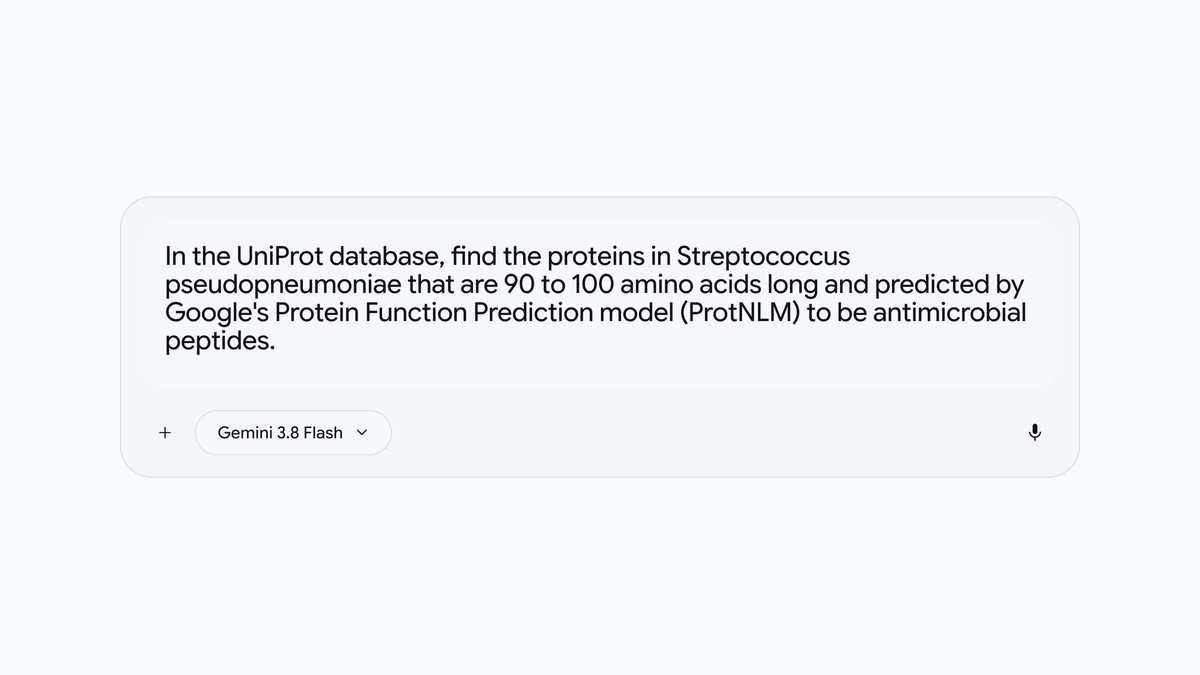
On October 15, Google DeepMind published a post describing an approach to finding new antimicrobial peptides, the small protein fragments that suppress bacteria. The method uses AI to read the amino acid sequence of a protein whose function is unknown and predict what that protein does inside a living organism. The aim is to pull new therapeutic candidates out of existing data from nature.
Why today’s antibiotics fall short
Bacteria that shrug off existing drugs are on the rise. Google DeepMind cited an estimate that antimicrobial resistance could cause roughly 10 million deaths worldwide per year by 2050. Preventing that, the company stressed, makes the discovery of new therapeutics urgent. Antimicrobial peptides are one class of substances with the potential to replace conventional antibiotics.
Within that class, the company singled out bacteriocins. Google DeepMind explained that bacteriocins evolved naturally to attack competing bacteria, from the structures wrapping their outer surfaces to the essential machinery inside the cell. Because they target bacteria’s core vulnerabilities, the company says, it is hard for pathogens to develop resistance to them. The point of hunting for new candidates is to put exactly those properties to work in drug development.
The data to search is accumulating fast. As sequencing of individual organisms and of mixed samples containing many organisms has expanded, global databases have amassed billions of naturally occurring amino acid sequences. Google DeepMind cited the widely used Nisin as an example that came out of such data. It also highlighted Darobactin, Dynobactin and Lariocidin, all found by combing through genomes.
How AI reads sequences of unknown function
Even when a sequence is in hand, what the protein actually does is often a mystery. Sequences that resemble no known protein, and whose function therefore cannot be guessed, simply sit in databases as they are. UniProt, the public resource that collects protein sequences and functional annotations, holds millions of sequences of unknown function that arrived through genome analysis. Data is abundant, but the share of it we understand has not kept pace.
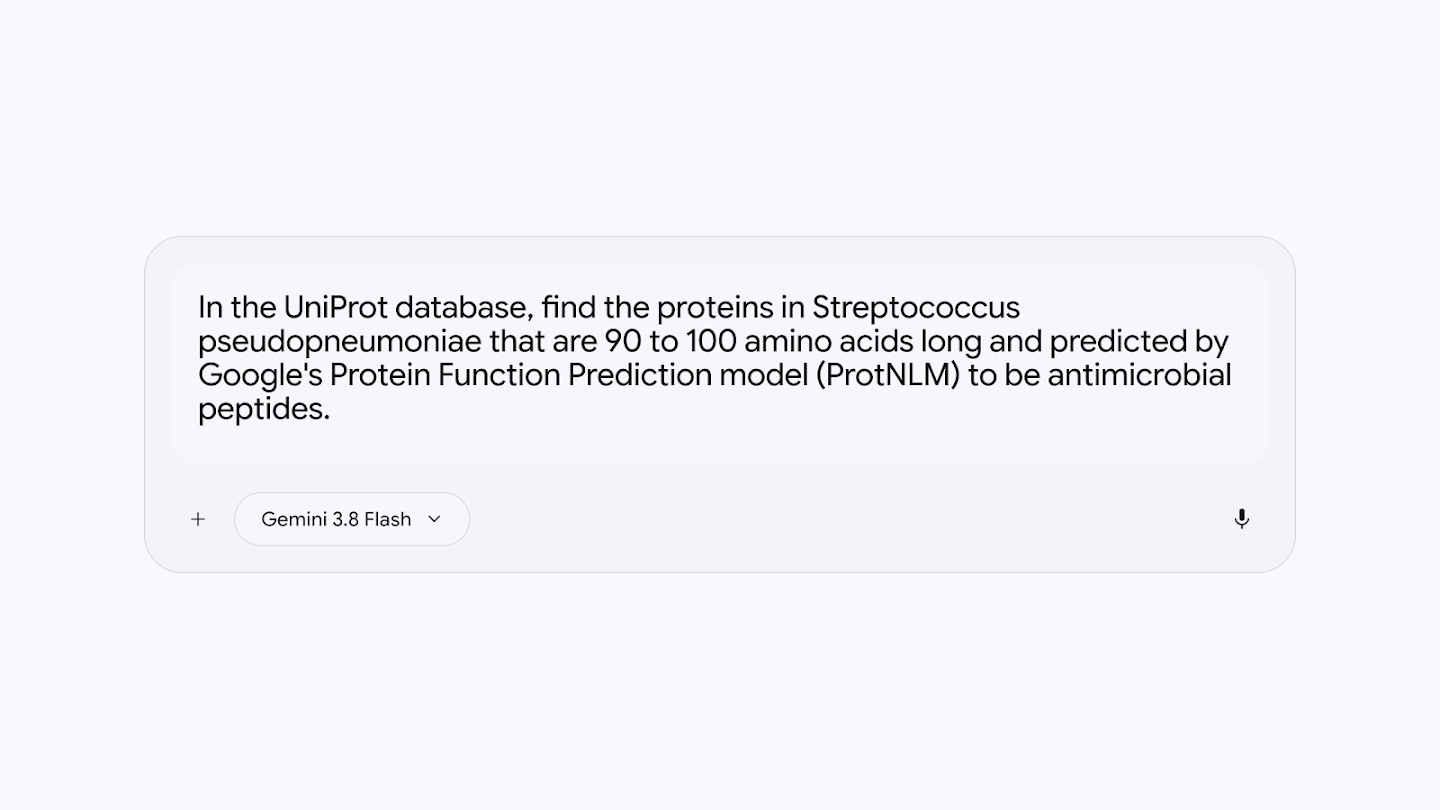
Image: Google DeepMind
ProtNLM, developed by Google, is an AI model that predicts a protein’s function from its amino acid sequence alone. It learns the regularities that evolution has left in those sequences, then infers and records a role for protein sequences that carry neither a name nor a description. Google said it used the model to attach high confidence functional annotations to millions of previously unnamed entries in UniProt. In effect, it hands researchers a clue attached to each sequence they look at.
The thing to watch from here is whether the functional predictions made by AI translate into confirmed antimicrobial activity in the lab.