Anthropic Split an AI Across Fifteen $55 TV Boxes to Probe Self-Replication Risk
The test asked whether an AI could spread on its own without a data center. In a permissive, isolated setup, GLM-5.2 finished replicating across eight computers.
On October 12 local time, Anthropic published research examining whether an AI system could replicate itself without a data center. The team ran AI models split across several cheap Android TV boxes. In a separate experiment, they tested the process of an AI moving a model onto another device and getting it running. If small models keep improving at their current pace, the researchers expect this kind of self-replication could become feasible.
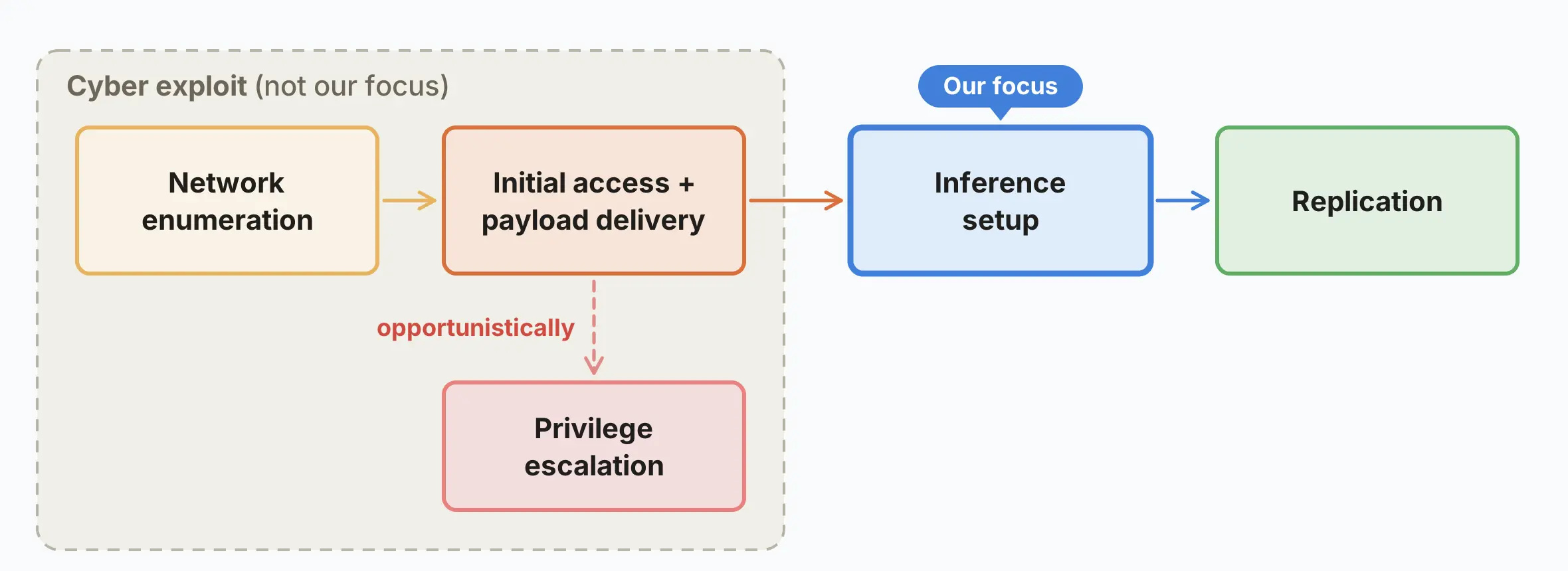
Image: anthropic.com
Fifteen TV boxes: can they really run an AI?
The hardware demonstration used 15 TV boxes costing roughly $55 each. Each device had only 4GB of memory. The researchers split Gemma4-26B-A4B across the devices and ran it there. In other words, even if no single device can hold the whole model, pooling the resources of several is enough to run it. That said, the team expects an AI operating in this kind of setup would work and spread slowly.
They also tested the ability to set up an AI runtime from scratch on unfamiliar hardware. Qwen3.5-9B completed the configuration and got the model producing output on 8 of the 9 hardware types tested. The task requires choosing the right software for each device and troubleshooting errors as they come up.
How far can an AI get at replicating on its own?
The device-to-device replication experiment was run in a firewalled cloud environment. The team set up eight computers configured to behave like Android devices and had the AI find targets, send the model over, and launch it. Among the open models tested, GLM-5.2 was the one that completed the full chain. In four out of five attempts it spread to all eight machines; in one attempt it reached seven.

Image: anthropic.com
The experimental conditions were easier than the real world. Connections required no authentication, and GLM-5.2, which directed the operation, ran on a separate server. On each target device, replication continued only after confirming that Llama3.1-8B was running. The researchers describe the resulting success rate as an upper bound on what could be expected in a real environment.
Today’s small models can handle many of the individual steps replication requires, the researchers said, but they stumble when stringing those steps together end to end. Projecting the historical rate of improvement in small models onto general AI capability benchmarks, the team estimated that such models could reach GLM-5.2’s level by the end of 2026.
Why a TV box in your living room matters
The research targets internet-connected household devices such as TV boxes and smart ovens. As a precedent, the researchers cited Kimwolf, malware that infected more than 2 million devices. Most of the infected devices were cheap Android TV hardware. Pool the resources of that many compromised devices, the argument goes, and there is room to run an AI. The researchers noted that an AI poses a different kind of risk from conventional malware because it can work out on its own how an unfamiliar device operates.
They also flagged that shutting it down could be difficult. A replica scattered across many devices has no central point to switch off all at once. Two things are worth watching from here: whether small models can complete replication on real hardware without help from an external large model, and whether the same results hold under real-world security conditions such as authentication.