In June, Deezer Said More Than 44% of New Uploads Were AI Music, and It's Labeling Them and Pulling Them From Recommendations
The BBC has spotlighted the "human premium," the extra value people place on work made by humans as AI creations proliferate. The music service Deezer now labels AI tracks and has released a free tool that lets users scan their own playlists.
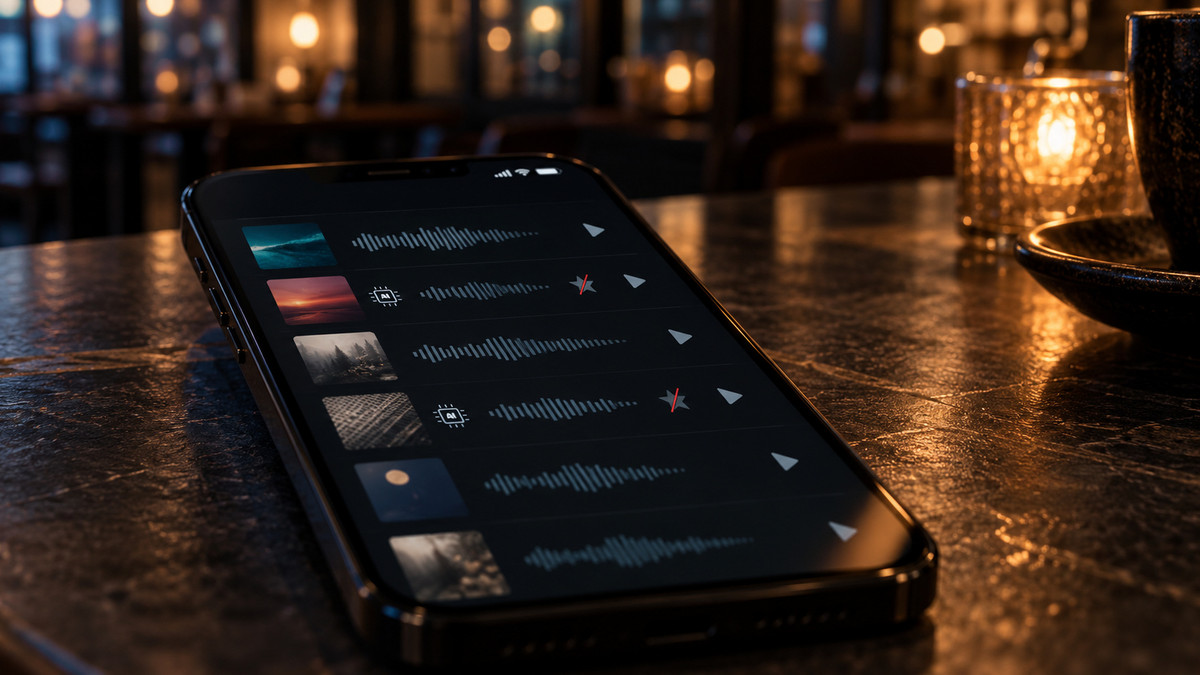
As AI-generated work piles up, the “human premium”—the extra value people assign to art made by people—is drawing attention. In an analysis piece, the BBC examined what listeners and viewers actually value about human creativity. In music, the streaming service Deezer has started labeling AI-generated tracks and has released a tool that lets users scan their own playlists.
75,000 tracks a day, and 44% of new uploads
In a June 11, 2026 announcement, Deezer said roughly 75,000 AI-generated songs are uploaded to its platform every day. At the time of the announcement, that amounted to more than 44% of all new tracks.
Telling the difference by ear turns out to be hard. In a survey commissioned by Deezer and conducted by Ipsos in October 2025, 97% of respondents failed to correctly identify how all three songs in a listening test were made. The test played two AI-generated tracks and one human-made track. The survey covered 9,000 adults across eight countries; South Korea was not among them.
Can you scan your own playlist?
Deezer released a free online detector in June 2026. Connect an account from a supported music service, and the tool scans your playlists and reports back. Deezer says users of 20 major platforms can use it, and that a Deezer subscription is not required.
The detector looks for the signatures that music-generating AI leaves behind in an audio file. Deezer says it identifies fully AI-generated tracks with 99.8% accuracy. The tool supports 27 languages.
What AI labels change for listeners
Deezer’s response to AI music began well before the playlist scanner. The company has been running detection technology since early 2025 and started attaching AI-music labels in June of that year. The user-facing scanning tool came later.
Deezer says it labels the AI tracks it detects and removes them from its recommendations. The songs themselves stay on the service, so users can still play them if they want. The company says it runs detection and labeling in order to protect creator payouts and to be transparent with listeners about what they are hearing.
The “human premium” debate centers on the idea that who made a work is itself part of how we judge its value. At Deezer, information about how a track was made now feeds into how it is labeled and whether it gets recommended. The open question is whether that information actually changes what people choose to listen to, and how much they are willing to pay for human-made work.