SK Telecom Unveils an "AI Staff Officer" That Pools Military Data to Support Commanders' Decisions
At the Ground Forces Festival, the carrier showed an operations support system that connects and analyzes scattered battlefield data. It also presented a battlefield communications system that combines low-Earth-orbit satellite connectivity with security technologies.
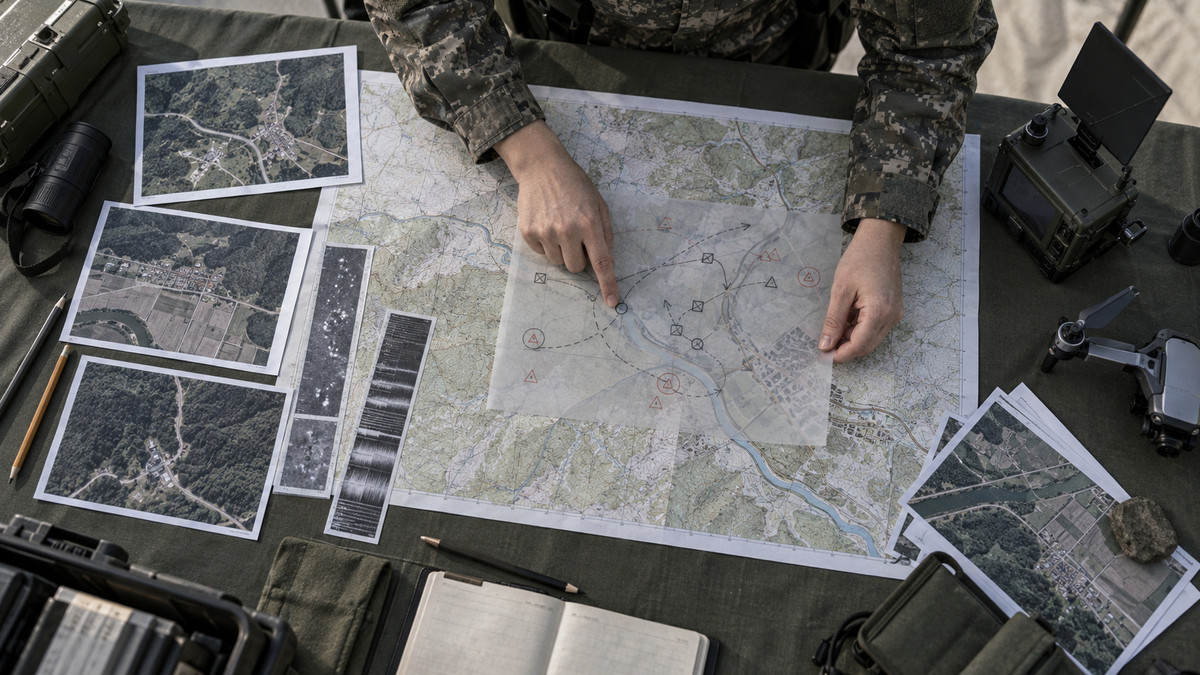
SK Telecom has unveiled an “AI staff officer” designed to pool military data and help commanders make tactical judgments. The company said on October 6 that it had taken part in the “2026 Ground Forces Festival,” held from October 1 to 5 on the runway at Gyeryongdae in Gyeryong, South Chungcheong Province, South Korea. Under T Military, its brand for applying AI to defense, the company exhibited and demonstrated operations support systems along with communications and security technologies.
What exactly does the AI staff officer do for commanders?
The AI staff officer is a system that connects military data scattered across many locations to help build a picture of the situation. It analyzes not only information on troops and equipment but also data streaming in from drones, robots, and sensors. The idea, according to the company, is to get commanders the information they need in time so they can decide faster and more accurately.
It does not stop at gathering data; it also maps the relationships between pieces of information. The platform that links the military’s data has been augmented with an “ontology,” a method of organizing what data means and how items relate to one another within a defined framework. The concept is to bundle and analyze disparate battlefield information and then put it to work in decision-making.
A “digital twin” that recreates the battlefield situation in a virtual space was also part of the setup. At this exhibition, the company walked visitors through the process of collecting and analyzing data and then rendering the battlefield in a virtual environment. The booth was built so that visitors and military personnel could see for themselves how information organized this way supports a commander’s judgment, the company explained.
How do you communicate on a battlefield with no base stations?
SK Telecom also introduced a low-Earth-orbit satellite communications system for places where ground-based communications facilities are hard to use. The network is built via satellite, with security technologies such as quantum cryptography and stealth Wi-Fi layered on top. The company said this combination allows for stable and secure communications even on the battlefield.
The communications system is meant to underpin an operational environment in which AI, drones, and robots exchange information in real time. It brings satellite links, wired and wireless communications, networking, and security together in a single configuration. The company presented it as technology that will support the South Korean Army’s future combat system, Army TIGER+, an initiative to integrate AI and data, drone and counter-drone technology, robotics, and cyber and electromagnetic capabilities into the Army’s core combat power.
When will this reach actual military units?
The event is a military culture festival organized by Army Headquarters, and members of the public were able to see the Army’s changing technology firsthand. SK Telecom said it was the only private company taking part in the policy promotion hall. Visitors examined both how AI helps the military assess situations and make tactical judgments, and the communications technology that ties it all together.
SK Telink, Techtree Innovation, Enhans, Mercury, KCS, and Pablo Air were among the partners that collaborated on the exhibition. SK Telecom said it had combined AI, satellite, network, and security technologies in a form that can be applied to real operational systems. Going forward, it plans to keep working with partners to identify technologies and business opportunities that can support the military’s AI transition.
Kim Gu-young, head of SK Telecom’s Enterprise Business Division, said the company would develop its AI and communications technologies to fit defense settings and expand related business. The open question is how much of what was on display will actually make it into military units, and how much it will help commanders decide in real operational conditions.