US Government to Call AI "SI" in Official Documents, Signs Safety Pact With Six Companies
The US government will use "Super Intelligence" (SI) instead of "AI" in official documents. Six companies including Google and OpenAI signed a safety management agreement, but it contains no compliance deadlines and no penalties for violations.
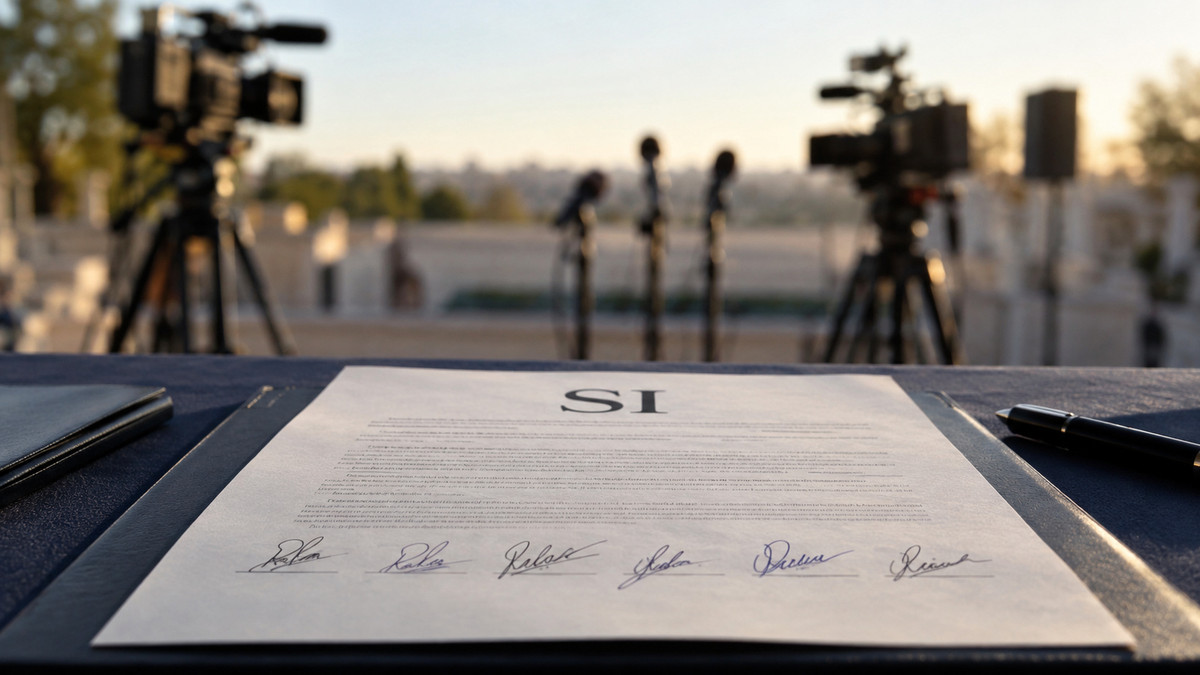
The US government has changed the official name it uses for AI and signed a safety management agreement with major companies in the field. On September 29, the US president and representatives of Google, Anthropic, Meta, OpenAI, xAI and Nvidia signed the agreement. A separate executive order signed the same day directs the federal executive branch to use “Super Intelligence (SI)” instead of “AI” in its official documents and communications.
What changes when AI is called SI
In the executive order, the legal scope of the technology that SI refers to is identical to the existing definition of AI. The name has changed, but what it points to has not. The executive order also requires that draft legislation containing the new definition be submitted to the president within 60 days.
Documents written in the past do not need to be rewritten with the new term. What changes immediately is simply how the federal executive branch refers to the technology.
What the six companies promised
The agreement states that companies developing frontier AI models bear responsibility for safety. The companies agreed to conduct internal reviews during model training and deployment, examining both a model’s capabilities and its risks. Specified areas of review include cybersecurity, biological and chemical threats, and unintended system access.
The safety management framework has four layers. On top of internal reviews that examine risk, companies will maintain an internal team to find and fix problems, undergo independent external evaluation, and establish an independent committee within the board of directors to handle oversight.
This is not the first time the US government and AI companies have put forward voluntary safety commitments. A similar set of pledges covering safety testing and security emerged in 2023. What sets this agreement apart is that it spells out, in four layers, the bodies responsible for review and the structure of oversight.
What happens if the promises are not kept
The agreement contains no compliance deadlines and no penalties for violations. It is a voluntary commitment, and it notes only the possibility that its terms could later be set out in law or regulation. Asked whether the agreement was binding, President Trump said he considered it morally binding. Anthropic’s Dario Amodei said at the event that the technology carries real risks and that how to respond is still under discussion.
The US administration has adopted a new name, and the six signatory companies have committed to taking responsibility for safety reviews and following the procedures to carry them out. The remaining question is how much those procedures actually reduce risk in services people use. The next things to watch are each company’s implementation timeline, the methods and results of external evaluations, and the laws and regulations still to come.