Google-Affiliated Researchers Propose "Artificial Symbiotic Intelligence," Where Humans and AI Get Smarter Together
Instead of one giant model, the vision is people and multiple AIs growing more capable together. The claim: individual model performance is not enough, and the rules and institutions that guide cooperation are what count.
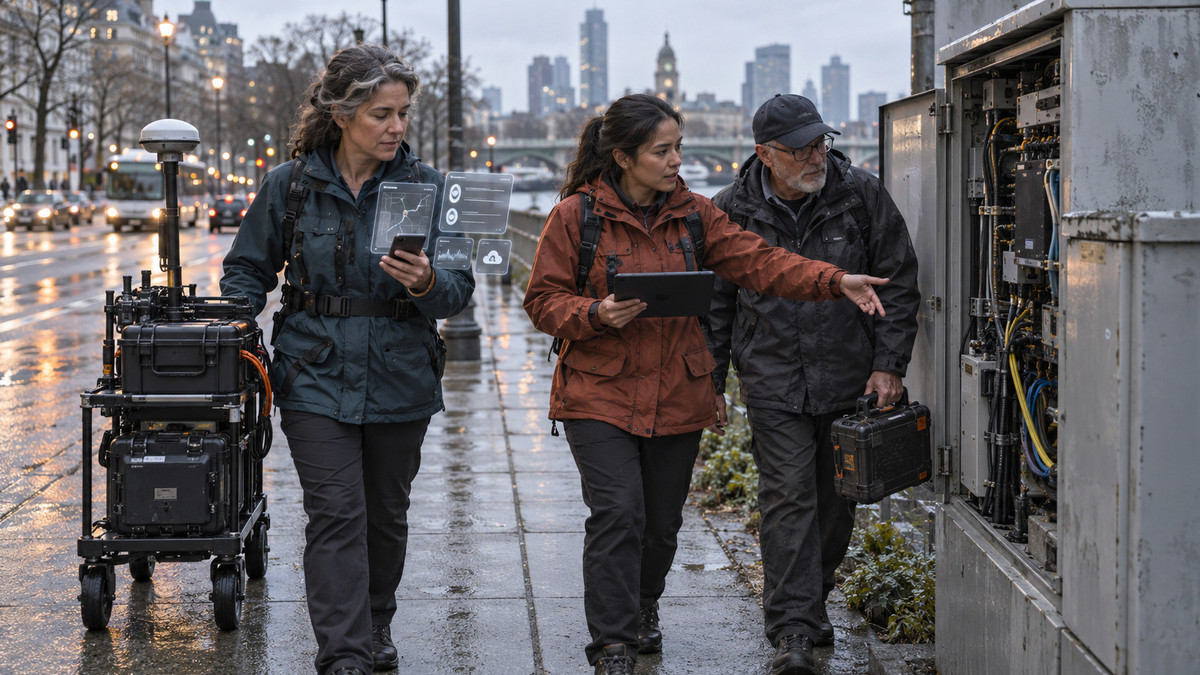
The DeepMind Institute published an essay on September 24 proposing what it calls artificial symbiotic intelligence. It was written by Benjamin Bratton, Blaise Agüera y Arcas and James Manyika. Their argument: future artificial general intelligence may emerge from collaboration between people and multiple AI systems. Rather than concentrating on growing one enormous model, they suggest looking at how different participants work together.
The institute was started by researchers from Google and Google DeepMind. It stated that the essay reflects the authors’ own thinking and is not Google’s official position.
Why one giant model may not be the answer
The authors present artificial symbiotic intelligence as an alternative to the “singularity” narrative, in which a single model improves explosively on its own. In their vision, AI that handles tasks on its own (agents), tools, people and institutions all take part. As they cooperate, the authors argue, a collective capability emerges that exceeds any individual participant.
What matters is not only the performance of an individual model but how the collaboration is run. The authors focus on the rules and institutions that determine how participants divide work and adjust to one another. The point is to examine how the overall system functions when multiple AIs and people work together, rather than how much a single AI can accomplish.
AI agent setups that already distribute tasks across multiple models appear as background examples. Artificial symbiotic intelligence is a broader vision that pulls people and institutions into that picture as well. So what distinguishes it from existing setups is not a performance number but who participates in the collaboration and what rules they follow. The authors describe it as a hypothesis about the future rather than a system that is already running.
How people and AI work together
The direction the authors propose is to make AI systems with distinct roles mesh together, and to build procedures for people to take part in that process. That includes rules for how the work is done, along with a system for exchanging views on the results. The authors identify designing such collaborative systems as a challenge still to be solved. How responsibility should be divided among multiple agents, and how coordination would work at scale, are left as open questions.
For ordinary users, the relevant idea is that people would take part directly in the process of working alongside AI. Instead of concrete usage instructions, the procedures and rules of collaboration sit at the center of the discussion.
The significance of the proposal lies in widening the lens on AI progress from the model itself to a web of collaboration involving people and institutions. As the idea takes more concrete shape, the things to watch are the procedures through which people take part, and who bears responsibility for work handled by multiple AIs. In the end, how the coordination and accountability problems the authors left as open challenges get resolved will be the core of the debate ahead.